Category: Branding

AI Made Building Easier. It Did Not Make Coherence Automatic.

AI has made it easier to build.

A founder can draft a landing page in an afternoon. Generate social captions in minutes. Outline an email sequence before lunch. Summarize customer research. Create first-pass campaign ideas. Build automations. Repurpose one piece of content into ten.

That is useful.

It is also changing the problem.

For years, many small businesses struggled because making things took too long or cost too much. A website update felt heavy. Content took forever. Systems were hard to build. Strategy stayed trapped in someone’s head because the production layer was expensive.

Now the production layer is lighter.

But the business still has to decide what matters.

That is where a lot of founders are feeling the tension.

They can make more than ever.
They can test more than ever.
They can access more tools than ever.
They can get more advice than ever.

But more output does not automatically create more momentum.

A business can now move faster in the wrong direction.

That is the quiet problem inside a lot of founder-led businesses right now.

Not lack of tools.
Not lack of ideas.
Not lack of expertise.

Lack of coherence.

AI helps execution. It does not replace judgment.

We should be honest about this.

AI absolutely helps people execute.

It can speed up drafts, reduce blank-page anxiety, organize messy thinking, analyze patterns, and help small teams produce more than they could before. Microsoft’s 2025 Work Trend Index describes AI moving from assistant to “digital colleague” in some organizations, with workers using AI to take on more complex work and scale their impact. Microsoft’s 2026 Work Trend Index goes even further, arguing that as AI and agents take on execution, the bigger question becomes whether organizations are structured to capture that expanded human agency. (Microsoft)

That matters.

But AI does not automatically know your business.

It does not know what your founder actually believes.

It does not know which customer hesitation matters most.

It does not know which offer is too confusing.

It does not know which idea is premature.

It does not know which content will build trust, not just fill a calendar.

It does not know what your business should stop doing.

AI can help make the thing.

It cannot fully decide what is worth making.

That is where human judgment still matters.

In fact, it matters more now.

Because when everyone can produce more, the advantage shifts from production to discernment.

What should we say?
What should we not say?
What needs to be clarified?
What needs to be built first?
What should be ignored?
What actually helps the customer trust us?
What connects to revenue, delivery, and the business we are trying to become?

Those are not just content questions.

Those are leadership questions.

More output can hide a deeper problem.

The business world has become very good at creating more.

More content.
More automations.
More lead magnets.
More templates.
More dashboards.
More strategy documents.
More platform-specific assets.

Some of that is necessary.

But more is not the same as clearer.

A founder can have a website, a content plan, a CRM, a brand guide, a few automations, a strategy deck, and several smart people helping with different pieces, and still feel like the business is not moving the way it should.

The website exists, but the offer still takes too long to explain.

The content is consistent, but the point of view is weak.

The CRM is built, but follow-up still feels awkward.

The brand looks better, but the customer journey still has gaps.

The strategy sounds smart, but it has not become a working rhythm.

This is what fragmentation looks like.

It does not always look like failure.

Sometimes it looks like productivity.

That is what makes it hard to see.

Expertise is useful. Fragmented expertise is expensive.

Expertise is not the villain.

We need people who go deep. We need designers, developers, copywriters, strategists, SEO specialists, automation builders, sales consultants, and operators who know their craft.

Specialists solve real problems.

But when every expert improves their own corner without anyone connecting the work to the whole, the founder becomes the integrator by default.

The founder explains the offer to the copywriter.

The customer to the designer.

The sales process to the automation person.

The brand voice to every new contractor.

The strategy again and again.

The context never fully transfers, so the founder stays mentally responsible for everything.

That is exhausting.

It is also not scalable.

Harvard Business Review has written about how strategy execution often unravels when coordination breaks down across silos and organizations fail to adapt effectively as conditions change. McKinsey has also written about the importance of cross-functional collaboration as companies try to deliver more coherent customer experiences. That research is usually framed around larger organizations, but small businesses feel the same problem in a more personal way: the founder is often the only person holding the full picture. (Harvard Business Review)

The issue is not that specialists are bad.

The issue is that disconnected expertise creates more for the founder to manage.

The knowing-doing gap is still real.

There is another layer here.

A lot of businesses already know more than they have built.

They know the message needs to be clearer.

They know the website is not doing enough.

They know the content needs a stronger point of view.

They know follow-up is inconsistent.

They know the offer needs to be easier to understand.

They know the team needs a better system.

The problem is not always awareness.

The problem is turning awareness into action.

Stanford professors Jeffrey Pfeffer and Robert Sutton named this the knowing-doing gap: the challenge of turning knowledge about improving performance into actions that produce results. Their work is a helpful reminder that knowing what to do is not the same as doing it. (Stanford Graduate School of Business)

That gap shows up in founder-led businesses every day.

Another audit feels responsible.

Another strategy conversation feels productive.

Another tool feels like movement.

Another course feels like preparation.

Sometimes those things help. Sometimes they are necessary.

But at some point, the business does not need another explanation of what is wrong.

It needs the answer built.

A live page.
A clear offer.
A finished campaign.
A working follow-up system.
A sharper message.
A customer journey that makes sense.
A content rhythm the business can actually sustain.

Execution is where truth shows up.

Until something is built, it is still theoretical.

The best brands make the idea tangible.

Some of the best lessons in coherent execution do not come from tech or marketing.

They come from brands that know how to turn a point of view into something you can see, feel, buy, wear, and remember.

Look at certain Japanese fashion and lifestyle brands. Not because every business should imitate them, but because they show what happens when a brand has a clear throughline.

45R does not simply talk about craft. Its public world centers artisanal Japanese clothing, indigo craftsmanship, denim, and clothes made with patience. The craft is visible in the product, the language, the visual world, and the pace of the brand. (45R GLOBAL)

Porter Classic offers a different expression of the same principle. Its Kendo and Sashiko collections connect material, tradition, construction, and use. The story is not just written on an About page. It is carried through the product itself. (PORTER CLASSIC)

Kapital is larger and more cult than small at this point, but it is still useful as a brand-world example. Its reputation is tied to denim, workwear, patchwork, Japanese textile references, Americana, humor, and a highly recognizable visual universe. The lesson is not that every brand needs to be eccentric. The lesson is that recognizable brands make their thinking visible. (GQ)

The strongest brands are not piles of assets.

They are resolved worlds.

The product, language, visuals, materials, experience, and story all point in the same direction.

That is what many growing businesses are missing.

Not more output.

More coherence.

AI makes coherence more important, not less.

This is the part founders need to pay attention to.

AI will keep making production easier.

More people will be able to create decent content.

More businesses will be able to launch campaigns.

More teams will be able to generate drafts, graphics, workflows, and ideas quickly.

That does not mean all of that work will be good.

It means the market will be flooded with more.

More average content.
More generic positioning.
More automated follow-up.
More lookalike websites.
More polished sameness.

The businesses that stand out will not be the ones that simply produce the most.

They will be the ones that know what they mean.

The ones with a clear throughline.

The ones whose website, content, offer, systems, customer experience, and founder voice all feel like they belong to the same business.

That is not automatic.

It has to be built.

The rise of the integrator-builder

This is why integrator-builders matter now.

Not just experts.

Not just advisors.

Not just project managers.

Integrator-builders.

People who can see across disciplines and make the work real.

They understand enough about brand to know when the message is off.

Enough about sales to know when the offer is not landing.

Enough about content to know when the voice is generic.

Enough about systems to know when follow-up is breaking.

Enough about design to know when the experience lacks trust.

Enough about AI to use tools without letting tools replace judgment.

They are not pretending to know everything.

They are connecting what matters.

That kind of range used to be treated like a lack of focus.

Now it is starting to look like an advantage.

Because business problems do not stay in one lane anymore.

Marketing touches sales.

Sales touches operations.

Operations touch delivery.

Delivery shapes reputation.

Reputation shapes content.

Content builds or breaks trust.

Everything is connected.

The founder should not be the only person holding the whole picture.

In many small businesses, the founder is still the only person who understands how everything connects.

They know why the offer matters.

They know the customer’s real fear.

They know which language feels right.

They know what the website should say, even if they cannot quite write it.

They know where the sales process breaks.

They know which ideas are good but premature.

They know which vendor is missing context.

So every decision comes back to them.

That works for a while.

Then it becomes the bottleneck.

The founder is not just leading the business. They are translating between the business and everyone helping build it.

That is a heavy role.

It is also a sign that the business needs more than output.

It needs integration.

Strategy has to become a system.

This may be the uncomfortable part.

A strategy that never becomes a working system is expensive thinking.

A content plan that never becomes a sustainable publishing rhythm is still a document.

A brand guide that never changes how the business communicates is still a file.

A CRM that does not support a real sales process is organized confusion.

A website that looks beautiful but does not clarify the offer is decoration.

This is not meant as a callout.

Most founders are doing the best they can with limited time, limited attention, and too many decisions. They are not careless. They are not lazy. They are often trying to execute inside too much noise.

The problem is that the market keeps selling them pieces when what they need is connection.

What founders should ask before adding more.

Before hiring another expert, buying another tool, or starting another campaign, pause long enough to ask better questions.

What is already here that is not connected?

What do we keep discussing but not building?

Where does the customer journey break down?

What does the founder still have to explain every time?

Which asset looks good but does not move the business forward?

Where are we creating activity without momentum?

What would make the business clearer in the next 30 days?

These questions are not meant to slow the business down.

They are meant to stop the business from building on confusion.

Sometimes the next step is not more content, more tools, more meetings, or more expert opinions.

Sometimes the next step is integrated execution.

A clearer message.
A stronger throughline.
A finished system.
A business that finally works as one.

The work beneath the work

At Sacred Fire Creative, this is often the work beneath the work.

A client may come in asking for a website, but the deeper need is a clearer offer.

They may ask for social media, but the deeper need is a stronger point of view.

They may ask for more leads, but the deeper need is a more trustworthy customer journey.

They may ask for automation, but the deeper need is a sales process that actually makes sense.

They may ask for strategy, but the deeper need is help turning the strategy into something real.

We care about the asset.

But we care more about whether the asset belongs to the system.

A website should not just look good. It should clarify the offer.

Content should not just fill a calendar. It should build trust.

Automation should not just move people through steps. It should support a real relationship.

Strategy should not sit in a document. It should become a working business rhythm.

That is the difference between producing marketing and building momentum.

Final thought

AI made building easier.

It did not make coherence automatic.

That distinction matters.

The businesses that win next will not be the ones that simply produce the most.

They will be the ones that know what they are building, why it matters, who it is for, and how each piece connects to the next.

The message has to connect to the offer.

The website has to connect to the customer journey.

The content has to connect to a real point of view.

The systems have to connect to how people actually buy.

The work has to connect to the outcome.

That is where trust grows.

That is where momentum starts.

The next advantage is not just execution.

It is coherent execution.

Personal Branding: Your Name Is the Brand that No Algorithm Can Touch

In a market flooded with AI-generated everything, the most powerful thing a small business owner can own is a recognizable human point of view.

Here’s the uncomfortable truth: your company brand can be copied. Your logo can be replicated. Your product can be undercut. But your perspective, your taste, your voice – those belong to you alone.

If you’ve been pouring all your energy into building your company’s brand while keeping yourself out of the picture, you’re leaving your most defensible asset completely untapped.

You see, founders who build a strong personal brand alongside their business brand don’t just stand out. They build something resilient enough to outlast any market shift, any algorithm update, and yes, any AI disruption.

Let’s talk about why personal branding matters now more than ever, and exactly how you can build it.

The AI Disruption That’s Happening Now

Generative AI has done something remarkable: it has made average almost free.

Need a logo? Thirty seconds.

A product description? Done.

A social media caption? Here are ten of them.

The barrier to producing decent, competent, forgettable output has collapsed to nearly zero.

This is great news for efficiency. It’s also a ticking clock for anyone whose value proposition rested on being competent rather than being distinctly themselves.

The brands that will thrive in this environment are the ones with a genuine human center: A founder who has a recognizable worldview, a cultivated aesthetic sensibility, and the courage to share it publicly.

AI can produce content. But it cannot produce you.

This is where personal brand stops being a nice-to-have and becomes a strategic necessity.

“AI can generate a thousand variations. What it cannot generate is a point of view. And that’s the thing people actually follow.”

What a Personal Brand Actually Is

A personal brand is not a headshot and a catchy bio. It’s the consistent expression of how you see the world: your values, your taste, your take on what matters and why. It’s what people think of when your name comes up in a room even when you’re not in it.

For a small business owner, your personal brand and your company brand work differently. Your company brand speaks to what the business does and who it serves. Your personal brand speaks to why anyone should trust you to do it. One earns attention, while the other earns loyalty.

When both are working together, something powerful happens. Customers don’t just buy your product or service. They buy into you. And people who are bought into a person are far more forgiving, far more loyal, and far more likely to refer others than customers who simply transacted a logo.

Founder Spotlight: Libra Forde – Women’s Foundation of Oregon

A former elite athlete, Libra built her personal brand on a weekly creative practice – “Motivational Minute” videos posted under the handle @BeTallLibra – long before her executive titles arrived. The handle alone is a small masterpiece: a literal nod to her 6’5” frame that doubles as an aspirational call to her audience. Her brand is rooted in one clear worldview – write your own script, stand in your power – expressed consistently across every platform and room she walks into. 

The Three Pillars of Personal Branding: Creativity, Curation, and Taste

There are many ways to build a personal brand. But the most durable ones are built on three interconnected qualities: creativity, curation, and taste.

These are the qualities that AI struggles to replicate and that audiences generally hunger for in a world drowning in generated content.

Creativity

Creativity here doesn’t mean being an artist. It means making things – sharing ideas, telling stories, solving problems visibly, and letting people watch how your mind works.

Every time you create something original, like a business insight, a process you invented, a perspective on your industry, you’re adding to a body of work that is completely and irreplaceably yours. The creative founder who shares their thinking publicly builds an audience that the company brand simply cannot.

Curation

We are living in an era of information overload. Every industry is buried in content. A founder who curates well, who filters thoughtfully, selects meaningfully, and presents ideas with context becomes an invaluable signal in the noise.

Sharing what you read, what you recommend, what you find worth paying attention to tells your audience something important: that you have judgment. Curation is a form of trust-building that compounds quietly over time. 

Taste

Taste is the hardest to define and the most powerful to own. It’s the accumulated expression of everything you find beautiful, useful, true, and worth pursuing. In business, taste shows up in the clients you choose, the work you refuse, the aesthetic decisions you make, the standards you hold yourself to.

When you share your taste publicly and consistently, you attract people who share it. That alignment is the foundation of the best working relationships and the most loyal customers.

Founder Spotlight: Marie Forleo – MarieTV and B-School

Marie Forleo is a masterclass in consistent taste and tone over a very long time. Her aesthetic, her energy, and her voice have been recognizably hers since the early YouTube days. She built her brand on the conviction that “everything is figureoutable” – a single, ownable idea that she made into a book title, a worldview, and a business philosophy. She demonstrates that a personal brand built around one clear belief compounds powerfully.

A Founder’s Roadmap to Building a Personal Brand

Building a personal brand is more of a practice than just a campaign. Here’s how to build one that’s rooted in who you actually are, that grows steadily over time, and that makes your business stronger for it.

1. Get clear on your point of view.

Before you post a single thing, know what you stand for and what you stand against. What do you believe about your industry that most people in it don’t say out loud? What’s the conventional wisdom you genuinely disagree with? What would you tell a fellow founder that no one else is saying? Your point of view is the engine of your personal brand. Without it, you’re just making noise.

2. Start making things, even if they’re small.

Write a weekly observation about your industry. Record a short voice memo about a challenge you solved. Share a behind-the-scenes look at your process. You don’t need a studio setup or a content team. Instead, you need consistency and honesty. Small and regular beats big and sporadic every time.

3. Become a trusted filter in your niche.

Pick a lane and curate it well. Share the articles, tools, books, and ideas that are genuinely shaping how you think, and tell people why they’re worth their attention. Don’t just repost; add your take. Over time, your audience will come to rely on your recommendations the way they rely on a friend with good judgment. That trust is currency you can spend when it matters.

4. Express your aesthetic choices deliberately.

Taste shows up in decisions, so make your decisions visible. Why did you choose that font? Why do you structure client relationships that way? Why do you say no to certain projects? When you articulate the reasoning behind your choices, you’re not just sharing information. You’re demonstrating judgment. And judgment, consistently expressed, is what builds a reputation.

5. Own at least one platform that you control.

Social media is rented land. An email newsletter, a podcast, a blog on your own domain – these are owned channels where no algorithm can reduce your reach overnight. Build one audience that you own. Even a small, engaged email list of a few hundred people who genuinely want to hear from you is worth more than ten thousand passive social followers. Start your list before you think you need it.

6. Show up generously in your industry.

Personal brands are built in relationships, not in isolation. Comment thoughtfully on other people’s work. Recommend fellow founders who do excellent work. Speak at local events. Mentor someone earlier in the journey. Generosity is both good for the world and strategically wise. The founders who give freely tend to accumulate trust, reputation, and goodwill faster than those who are purely promotional.

7. Let AI amplify you, not replace you.

Used well, AI tools can take your one great idea and turn it into a newsletter, a social post, a short video script, and a slide deck in the time it used to take to write the post alone. The key is that the original thinking has to come from you. Use AI as a distribution engine for your ideas, not a substitute for having them. The founder who brings genuine perspective and uses AI to broadcast it will outcompete anyone who lets AI generate the perspective itself.

Founder Spotlight: Brené Brown – Researcher and Author

Brené’s personal brand is built almost entirely on intellectual generosity and the willingness to make academic research feel personal. Her 2010 TED Talk went viral because she talked about her own breakdown. Every book, every interview, and every Instagram post is an extension of a consistent worldview she has been building for over two decades. For founders who lead with expertise, Brené is the blueprint for turning rigorous knowledge into a deeply human brand.

Personal Branding Is a Long Game

A personal brand is a compounding asset. The work you put in today – the post you write, the observation you share, the conversation you have in public – accumulates. A year from now, someone will find something you wrote and reach out. Three years from now, that reader might become a client, a collaborator, a referral source, or a champion.

Your company brand can have a great quarter or a terrible one. Your personal brand, built steadily and honestly, will only keep growing through business pivots, market downturns, and whatever the AI landscape looks like next year.

The founders who understand this early have an enormous advantage over those who wait until the market forces them into it. Start now, while building feels optional. By the time it feels urgent, you’ll already have something solid.

Your name is the one thing in your business that no competitor can copy, no algorithm can bury, and no AI can replicate. That’s worth building.

Ready to build a brand that’s unmistakably yours? Sacred Fire Creative helps founders and small business owners develop personal brands rooted in their genuine creativity, curation, and taste. Let’s talk.


3 Marketing Trends Currently Shaping 2026 (and What Small Businesses Can Do About Them)

Marketing in 2026 feels like a paradox on purpose.

On one hand, people are exhausted by “authenticity theater,” the brand voice that sounds relatable but is actually a performance. On the other, culture is also hungry for spectacle, fantasy, and curated unreality.

Add in a renewed pull toward spirituality/values-based identity and a tactile, old-school design renaissance, and you’ve got a year where the brands that win are the ones that choose a lane deliberately and commit.

As we travel deeper into 2026, the strategies that dominated the early 2020s are beginning to feel stale. The consumer’s bullshit detector is more finely tuned than ever, and the craving for connection is deepening and splintering in fascinating ways.

Here are the three essential marketing trends we’ve been observing in 2026 that small businesses need to know, complete with real-world examples and actionable steps.

#1 – “Alter-Reality”: curated surrealism and intentional spectacle

Audiences are tired of curated “realness,” the overly produced messiness that is meant to make the content creator look relatable and authentic. But here’s the thing: they are fully embracing artifice, fantasy, and spectacle.

If everyone is trying to be “real,” the way to stand out is to construct a hyper-real, fantastical world – what we call “alter-reality.” This isn’t about lying to the consumer. It’s about inviting them into a clearly constructed performance or artistic statement. It acknowledges that marketing is a stage where you can put on an unforgettable show.

Alter-reality in fashion

The fashion scene is one of the best spaces to spot intentional spectacle – often a collision of art, storytelling, and creative AI. Here are a few brands that do this spectacularly:

Bathing Ape. Japanese streetwear brand Bathing Ape recently announced their ICY product line with a video that’s literally cold. Amid a field of snow, a giant white and sparkly running shoe stands encased in a block of ice, attracting the homage of pilgrims in white camo jackets. The video evokes a sense of discovery, luxury, and even perhaps a religious experience.

Akiko Aoki. Japanese designer Akiko Aoki believes that fashion is performance, so it’s no surprise that the company relies on out-of-this world videos to promote their creations. This video shows water in space transforming into one of their shoes.

and WANDER. Outdoor wear company and WANDER collaborated with END. and Crocs to produce this video where two lads are enjoying a hike up a rocky shore that leads to a beach with breathtaking views. Watch until the end for the twist.

How-to for small businesses

  1. Develop a brand persona. Don’t just be “relatable.” Create a heightened, theatrical version of your brand’s personality. Think of it as a character that embodies your brand’s most daring qualities.
  1. Create fantastical visuals. For a specific campaign, ditch lifestyle photography for artistic, dreamlike imagery. Use bold colors, exaggerated proportions, or surreal compositions in your product photos.
  1. Lean into storytelling. No matter how cool or fantastic your imagery is, your content won’t track if it doesn’t have a story to hook your audience.
  1. Be honest about the artifice. If you use AI/CGI heavily, disclose it. The magic works better when people feel invited, not tricked.

#2 – Soul Branding: connecting through reflection and shared values, not spiritual cosplay

In 2026, spirituality in branding isn’t “add a moon phase graphic and call it healing.” The version that lands this year is a values-based meaning that encourages people to reflect upon themselves and participate in the experience. We’re talking rituals, mindfulness, gratitude, kindness, restoration, and community care.

Our world is becoming increasingly secular but deeply anxious. Consumers are looking for brands that offer more than just a transaction. They’re seeking a sense of belonging, purpose – and yes, actual spiritual connection.

This doesn’t mean that your brand needs to become religious. Instead, it’s about tapping into universal human values, offered as a practice or philosophy, and not as a costume.

Headspace and the branding of mindfulness

Headspace, the meditation and mindfulness app, is a prime example of building a brand around a spiritual need. They didn’t sell a meditation timer. They branded peace of mind.

Through friendly animation, accessible language, and a clear promise of “less stress, more sleep,” they demystified an ancient spiritual practice and made it a modern lifestyle essential.

Their marketing focuses on the shared human experience of anxiety and the collective desire for a calmer mind, creating a massive community united by this common value. Their content, from podcasts to Netflix specials, reinforces this mission, positioning the brand as a guide on a personal journey.

How-to for small businesses

  1. Identify your core value. Beyond the functional benefit of your product, what deeper need does it serve?
  1. Build community around that value. Host workshops, discussion groups, or online challenges that focus on this shared value, not just your product. A yoga studio could host a “mindful living” discussion group, not just yoga classes.
  1. Share your “why” on a deeper level. Tell the story of why you started your own business in a way that connects to a larger sense of purpose. Be vulnerable about your own journey toward that value. However, avoid moral superiority or implying that people are lesser if they don’t share your worldview.
  1. Encourage your audience to reflect. Do you have something to say to your audience that will require them to think deep and search within their soul? Don’t be afraid to say it. We’re living in an age when people need to reflect and act on what they stand for.

#4 – Tactile Design: handmade texture as proof of roots

As our lives become dominated by screens, there’s a growing hunger for the tangible, the handmade, and the imperfect. This trend sees brands using traditional, analog methods in their visual identity to tell a story of craft, heritage, and human touch.

It’s a rebellion against the slick, flat aesthetic of the AI-generated visual age, using texture and physical processes to create a more visceral connection. It communicates rootedness without needing explanation. And it gives customers something sensory to remember because touch, or the implied touch even on screen, creates stronger emotional imprint than flat visuals alone.

Rose Bakery: turning bread into print assets

One of the best modern “tactile identity” case studies is Rose Bakery, where Super Studio built an entire visual system from the physical language of baking and old-school print techniques.

The identity was inspired by real bakery processes, including marks like scoring lines in dough – those blade cuts bakers make before baking. Super Studio translated that into a logo language that feels like bread craft, not generic artisan styling.

The system also leaned into a potato-print/stamp-like technique and textured visuals that eco traditional printmaking. So, the brand looks like it was made the way the bread is made: by hand, with heat, time, and material.

The visuals don’t just decorate the brand. They behave like the product behaves. That’s tactile storytelling.

How-to for small businesses

  1. Make your own textures. Ink-stamp something connected to your product (like a tool imprint, a botanical leaf, or a fabric weave), scan it, and build your brand patterns from that.
  1. Use analog artifacts as content. Film the stamping/printing process. Customers love watching physical craft happen.
  1. Translate tactile into digital. Turn scans into backgrounds, packaging labels, social templates, and website accents so the handmade story stays consistent across channels.
  1. Have fun. Creating something with your own hands, where you actually hold and manipulate tools and materials, is a therapeutic experience. Dive in and have fun.

Pick, then commit.

2026 isn’t demanding that brands be one thing. It’s demanding coherence.

Set aside curated “realness.” Your audience doesn’t want to see bullshit like that anymore. Instead, be boldly surreal with intentional spectacle. Bring back tactile signals that engage the senses, signal trust, and show where you come from. Most importantly, root your brand in values that people can feel.

The common thread we have here is a rejection of the middle ground. In 2026, bland and safe won’t survive. Whether you choose curated fantasy, deep spiritual connection, tangible craft, or a little bit of everything, the key is to commit fully and tell a story that resonates on a human level.

It’s time to pick your path and start building.

Create a powerful brand story that speaks to your audience and engages them on a spiritual level. Collaborate with Sacred Fire Creative today.


Why the Year of the Fire Horse Is a Catalyst for Breakthroughs

2026 is the Year of the Fire Horse. For those of us who follow the Lunar Calendar, the Year of the Fire Horse isn’t just another year. It’s an energetic flashpoint: a period of significant cultural shift, rapid innovation, and a collective breaking of old patterns.

If you’re a business owner, the arrival of the Fire Horse signals a pivot from the introspective “planning” phases of previous years to a high-octane, action-oriented season.

This is the year where the momentum you’ve been building in the past finally takes off.

A Rare and Potent Intersection

To understand why 2026 is significant, we have to look at the intersection of the Horse and the Fire element in Chinese cosmology. The Horse inherently represents speed, independence, and the drive to cover vast distances. When the element of Fire is introduced, an event that occurs only once every 60 years, those traits are amplified by brilliance, passion, and heat.

Culturally, for entrepreneurs and leaders who follow the Lunar cycles, the Fire Horse is synonymous with decisive action. This is not a time to “wait and see.” It is a season that favors the bold, the assertive, and the innovative. It is seen as a transformative period that demands leadership and rewards those who have the courage to make resolutions a reality.

Harnessing the Year’s Fire Energy

You don’t need to be an observer of Chinese astrology to recognize that markets and cultures move in waves. Think of 2026 as a collective surge in momentum.

When the prevailing energy is fast-paced and innovative, the cost of hesitation increases. This is a time to move with the current rather than standing on the sidelines. It’s an external, action-oriented follow-up to the quieter, more introspective years we’ve recently navigated.

7 Strategies for Decisive Action in 2026

To lead effectively in a high-intensity year, your strategy must move from theory to execution. Here are seven ways to harness this period of transformation.

1. Prioritize execution over deliberation.

The Fire Horse favors the swift. If you’ve been over-analyzing a new direction or a major project, 2026 is the time to commit. High-energy cycles move faster than your ability to perfect a plan. Launch, gather intelligence in real-time, and refine as you go. Innovation happens in the doing, not the dreaming.

2. Heighten your visibility and authority.

Fire provides its own light. This is a year for assertive leadership. It’s the time to claim your space in the market, share your vision with conviction, and be the primary voice in your industry. If you’ve been playing small, this cycle provides the external heat needed to expand and amplify your reach.

3. Shorten the innovation cycle.

How long does it take for an idea to become a reality in your business? In a fast-paced period, agility is your greatest asset. Audit your internal processes and remove the friction that slows down progress. The goal is to create a business that can pivot and accelerate without the weight of outdated bureaucracy.

4. Build strategic alliances.

Dynamic energy is amplified when it is shared. Look for partnerships with other high-initiative leaders who match your pace. Collaborations create a slipstream effect – the collective momentum of a strong group will carry you through challenges much faster than working in isolation.

5. Maintain radical focus.

The danger of a Fire year is that energy can become scattered. Without focus, a spark becomes a wildfire that burns out without producing results. Use this year to put on blinders toward distractions. Identify your most ambitious goals and ruthlessly filter out anything that don’t align with your intended finish line.

6. Manage your energy proactively.

A high-intensity year demands massive stamina. Because the pace is faster, the risk of exhaustion is real. To keep your fire burning through the fourth quarter, you must treat your recovery with the same seriousness as your production. High-stakes leadership requires a balance of intense action and intentional rest.

7. Burn away old patterns.

Fire’s primary role is transformation through clearing. Use 2026 to identify the habits, services, or systems that are dead weight. If it doesn’t contribute to your momentum, let it go. Breaking old patterns is a prerequisite for making a significant breakthrough.

What Are You Waiting For?

The Year of the Fire Horse is a unique opportunity to achieve in months what usually takes years. It is a period defined by enthusiasm, progress, and the courage to pursue ambitious goals.

The conditions are set for a breakthrough. The question is: Are you ready to take the lead and move with the season’s momentum? If not, what in the world are you waiting for?

Authentic brand storytelling and an online presence that resonates powerfully with your audience will fuel your Fire Horse energy this year. Fuel that fire by collaborating with Sacred Fire Creative.


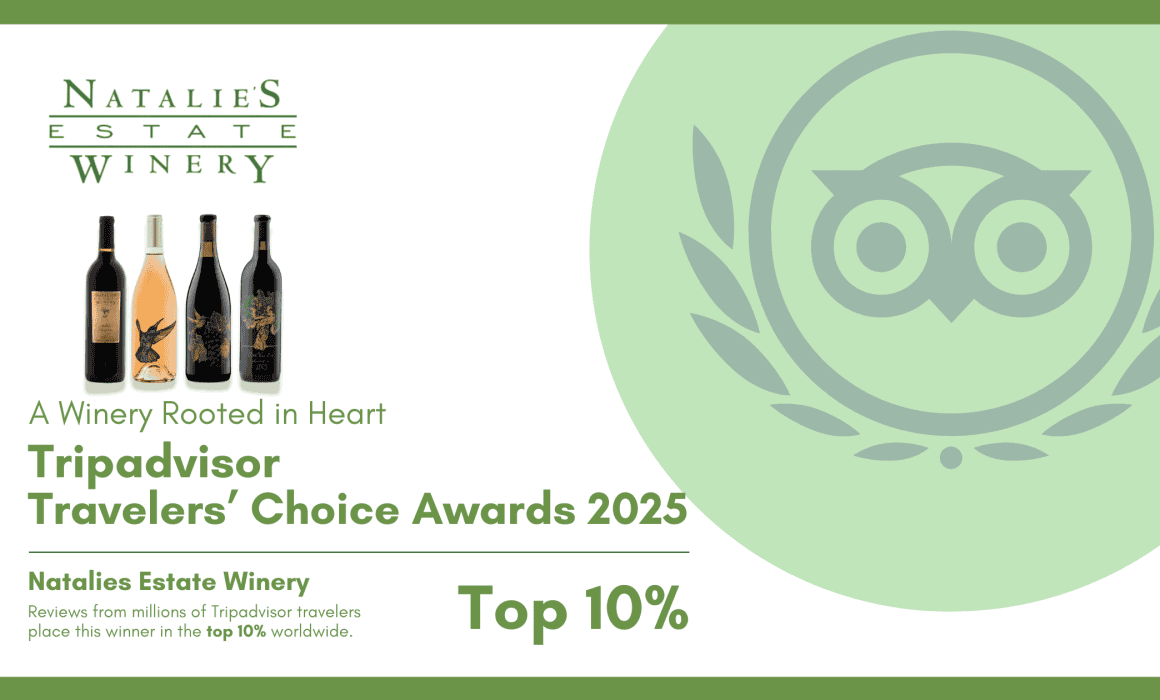
A Winery Rooted in Heart: Natalie’s Estate Winery Earns TripAdvisor Travelers’ Choice Award Third Year in a Row

This year, Natalie’s Estate Winery reached a beautiful milestone: being named a 2025 TripAdvisor Travelers’ Choice Award winner and ranked 1 out of all attraction in Newberg, Oregon. This is the third straight year that the winery has won this recognition.

It’s a recognition that speaks volumes, not just about the quality of their wines, but about the quiet, consistent hospitality they’ve extended over the years. For those who have visited, it’s no surprise. A tasting at Natalie’s doesn’t feel like a tourist stop. It feels like coming home.

From all of us at Sacred Fire Creative, congratulations to the Natalie’s Estate Winery team. We are so thrilled to celebrate this moment with you.

A Family Story, Bottled and Shared

Natalie’s Estate Winery began as many great things do: with family at the center.

In 1999, Boyd and Cassandra Teegarden planted the first seeds of the winery in Oregon’s Willamette Valley. Named after their daughter Natalie, the winery was more than a business. It was a legacy in the making.

Boyd brought his experience from the wine industry, while Cassandra applied her international business acumen. Together, they built something deeply personal. Not just a winery, but a place where connection, craftsmanship, and community would be the cornerstones.

From the beginning, they committed to doing things the hard but meaningful way: hand-harvested grapes, small-batch production, traditional European winemaking techniques. They didn’t chase trends. They built trust.

From a Quiet Hillside to a National Stage

What started as a humble estate in Newberg has grown into a name recognized across the Pacific Northwest. And now, the world.

Over the years, Natalie’s Estate has become known for its bold red varietals, including Zinfandel, Cabernet Sauvignon, Sangiovese, and Barbera – wines that are more commonly associated with California, but lovingly crafted in Oregon with care and finesse. Their recent 25th anniversary saw the introduction of a vibrant new Sauvignon Blanc, another step in their journey evolving while staying true to their roots. 

Visitors today are welcomed not by hired staff, but by Boyd and Cassandra themselves, who still host tasting by appointment. Whether you’re a wine enthusiast or a curious first-timer, every experience is personal, educational, and unhurried. It’s about relationship, not transaction.

This commitment to intimacy, quality, and generosity is what earned them the Travelers’ Choice Award, and why so many guests leave feeling like family.

Deeply Local, Proudly Connected

Beyond the wine, Natalie’s Estate Winery continues to invest in the community that shaped them.

Their partnerships with local artisans and nonprofits reflect a belief that business should serve more than just the bottom line. A portion of their wine label collections, such as the Big Sky Collection, featuring original Montana artwork, goes toward supporting river conservation charities.

Events like their wine-and-cheese pairings with Face Rock Creamery aren’t just indulgent. They’re a celebration of local craftsmanship and collaboration.

For Natalie’s Estate, wine has always been a vehicle for connection, creativity, and contribution.

A Toast to What Matters

It takes time to build a business like Natalie’s Estate Winery. Time, care, and a willingness to grow while staying grounded. Over 25 years, Boyd and Cassandra have done just that, nurturing not only vines, but relationships, traditions, and a reputation for excellence.

Being named Newberg’s #1 attraction on TripAdvisor is more than an accolade. It’s a reflection of what happens when you put people first and lead with heart.

At Sacred Fire Creative, we believe in honoring businesses that stay true to their story while uplifting others along the way. Natalie’s Estate Winery is one of those rare gems, and this recognition is richly deserved.

Sacred Fire Creative specializes in marketing for mission-driven and visionary founders seeking a wider community impact. If your business is in this space, we’d love to work with you. Contact us today, and let’s see how we can collaborate.


Scaling with Integrity: How Kristy Runge Helped Build HelloCare’s Operational Backbone

Kristy Runge didn’t just co-found a caregiving company. She architected its operational success.

With decades of experience in healthcare and business leadership, Kristy understood that meaningful care doesn’t scale on goodwill alone. It takes rigorous systems, thoughtful hiring, quality assurance, and leadership that balances compassion with performance.

That’s the foundation she helped build at HelloCare, a company now serving families in multiple cities across Oregon.

The System Behind the Soul

While HelloCare is known for its deeply personal, people-first approach to in-home care, much of that consistency comes from the operational design that Kristy helped create.

She implemented systems and processes at HelloCare that ensure quality at scale without sacrificing heart. Her leadership bridges the emotional weight of caregiving with the accountability and structure required to grow a service-based business that can last.

It’s that rare balance between heart and logistics that has made HelloCare not just sustainable but replicable.

Why Founders Should Hear Her Speak at the Oregon Startup Conference

Kristy Runge will be featured on the Success Panel at the Oregon Startup Conference on June 20, 2025, at George Fox University.

There, she will offer founders a transparent look into what it really takes to scale a mission-driven operation.

She’ll speak to the practical aspects that many early-stage businesses overlook: operational workflows, systems thinking, hiring for values and competence, and building processes that grow with your team – not against them. 

If you’re an entrepreneur building in the service space, Kristy’s insights are both inspiring and actionable. She’s walked the road of taking a community-centered idea and turning it into a business with backbone. And she’s ready to share how.

Hear from founders like Kristy Runge, who know how to build for both heart and scale.

Register at www.oregonstartupconference.com.


For Gen Z, By Gen Z: How Life2Launch Institute Empowers Young People to Lead Our Tomorrow

In today’s rapidly evolving world, young individuals often find themselves at a crossroads, seeking direction amid a plethora of choices.

Enter Life2Launch Institute, a beacon for Gen Z and dedicated to providing holistic life and career-launching tools.

Life2Launch participated in the Launch Mid-Valley Startup Bootcamp Weekend last January 31 to February 2, 2025, at Linfield University’s W.M. Keck Science Complex.

Competing against 20 other innovative startups, the team secured second place among the top ten teams, underscoring their commitment to empowering youth.

A vision rooted in community

Life2Launch isn’t just another organization. It’s a collaboration led by Gen Z for Gen Z.

Recognizing the unique challenges their peers face, the institute works with youth, parents, educators, workforce leaders, and community stakeholders. Together, they design, test, and innovate solutions that build confidence, provide direction, and create accessible resources for the next generation.

Life2Launch was formed in response to Oregon’s new diploma requirements for 2027, which emphasize higher education, career path skills, and personal finance education. Its main focus is expediting the development of a holistic life and career navigation platform.

This tool aims to resonate with the realities and aspirations of today’s youth, bridging the gap between education and the workforce. By empowering young individuals to actively shape their educational and career pathways, Life2Launch is setting a new standard for learner-centered, real-world applicable education.

Led by Denise Ker Waldron, Ben Franson, and Henry Ker, Life2Launch is dedicated to guiding young individuals toward successful futures, fostering a culture of innovation, inclusivity, and empowerment.

Building bridges within the community

Life2Launch’s impact extends beyond individual development. By collaborating with various community stakeholders, it guarantees that the tools and resources they create are comprehensive and inclusive.

This collective approach not only benefits the young people they serve but also strengthens community ties, fostering a supportive environment where the next generation can thrive.

Life2Launch Institute stands at the forefront of youth empowerment, blending innovation with community collaboration. Its determination to guide Gen Z through the complexities of modern life ensures a brighter, more directed future for all.

Are you a small business owner in Marion, Polk, or Yamhill? Grow your business with Launch Mid-Valley. We’ve got tools and resources to help you grow and scale up your business. Just fill out this form to get started >>> https://tinyurl.com/mid-valley-innovation.

Launch Mid-Valley, the Mid-Willamette Valley Innovation Hub, with funding from Business Oregon, fosters an innovative entrepreneurial ecosystem where local businesses can connect with investors, mentors, and industry leaders in the counties of Marion, Polk, and Yamhill.


Authentic Storytelling: The Heartbeat of the Digital Economy

In today’s fast-paced digital world, a quiet but powerful force shapes how brands connect with their audiences. This force? Storytelling.

Storytellers – writers, designers, and videographers – bring brands to life, elevating them from mere businesses into something meaningful and unforgettable.

Think about the last brand that left an impression on you.

It probably wasn’t just because of a product or service. You felt yourself form a deeper connection with the brand. It expressed a greater purpose that aligned with your values.

Behind that connection is a creator weaving a story that spoke to you and built trust, creating a lasting emotional bridge. 

In this digital economy, where attention spans are fleeting, and competition is fierce, creative minds don’t just sell products – they forge connections that turn casual interactions into deeper relationships through storytelling.

At Launch Mid Valley (LMV), storytelling plays a key role in how our partners reach their audiences and grow their businesses. LMV is the regional innovation hub for central Willamette Valley in Oregon. An initiative of the Strategic Economic Development Corporation, LMV’s purpose is to catalyze business growth by helping startups and entrepreneurs connect with the training, mentorship, funding, and other resources they need.

Here’s how some of Launch Mid Valley’s partners created their impact through storytelling. 

HelloCare: Communicating compassion

HelloCare provides caregiving services that allow seniors to age in place at home. To communicate its values of compassion, connection, and community, founder Helen Anderson openly shares her personal stories of her grandparents and a great-grandparent who would have had a better aging experience if they had caregivers at home. 

Helen’s and other HelloCare client stories reinforce the importance of caring for our loved ones with dignity. Through these genuine, heartfelt, shared experiences, HelloCare nurtures trust and reminds families and caregivers alike that they’re not alone in this emotional journey. 

Indy Commons: A space for community building

At first glance, Indy Commons seems like a simple coworking and events space in Independence. It has desks for remote workers, a kitchen for food entrepreneurs, a marketplace showcasing local crafts, an events space, and a podcast studio. But in truth, Indy Commons is a hub for connections and collaborations in a rural community setting.

Founder Kate Schwarzler believes that people don’t need to leave their rural hometowns for the bigger cities to find opportunities. They can create their opportunities right where they are. She demonstrates this through the success stories of the individuals and businesses using her space. Through Kate’s work, Indy Commons has become a place where collaboration and innovation thrive.

CreativiTEE: Expressing identity through apparel

Storytelling is a means of self-expression. And self-expression can take on many forms through different mediums – including T-shirts. This is what Roanna Gingrich of CreativiTEE offers her customers: the means to express themselves through her space and the materials she provides.

Roanna believes that every piece of apparel tells a story, allowing individuals to share unique aspects of their identities. Through CreativiTEE, she encourages the people in her community to express themselves freely, fully using their imagination and individuality. By turning each garment into a narrative, Roanna gives her customers a way to wear their stories and celebrate who they are. 

Why is storytelling a powerful tool for brand-building?

Why do the stories of HelloCare, Indy Commons, and CreativiTEE resonate well with their audiences? Their stories are authentic, making them powerful tools for building bridges with their audiences.

Here’s why authentic storytelling is an effective brand-builder:

1. It creates trust and credibility.

People are more likely to trust brands that are open and transparent. Authentic stories highlight the real journey, challenges, and values behind a brand, making it easier for customers to relate to and believe in its mission.

2. It fosters emotional connection.

Stories evoke emotions. And when customers feel an emotional bond with a brand, they’re more likely to stay loyal. Brands that share personal, heartfelt stories help customers see themselves reflected in the brand’s journey, forming a lasting emotional link. 

3. It differentiates the brand in a crowded market.

In a competitive landscape, a brand’s story is a unique asset that competitors can’t replicate. Authentic storytelling reveals the brand’s personality, history, and purpose – helping it stand out.

4. It creates a sense of community.

Authentic storytelling fosters a sense of belonging among people who identify with the values shared in the story. This community-building can transform customers into advocates who organically share and promote the brand.

5. It engages and holds your audience’s attention.

Humans are naturally drawn to stories. An engaging narrative captures attention far more effectively than simple product descriptions or sales pitches, making audiences more receptive to the brand’s message.

6. It boosts brand recall.

People remember stories better than facts or figures. A brand with a memorable story stays top-of-mind, making customers more likely to return or recommend it to others and enabling the brand to grow further.

How can you tell your brand story with purpose?

Content creators aren’t just artists – they’re strategists who balance beauty with data-driven insights. They craft every detail of the story to make connections that matter.

Here’s how you can tell your brand story with purpose:

  1. Define your brand’s core values. Identify what matters most to your brand. This foundation will guide how you tell your stories.
  2. Engage with your audience. Use surveys, social media polls, or feedback sessions to understand your audience’s values and interests and how they intersect with yours.
  3. Create a compelling narrative. Weave your brand’s values into a story that reflects your mission. Use real experiences and testimonials to enhance authenticity.
  4. Use multiple channels. Share your story through various platforms, from social media to blogs and videos, to reach a broader audience. Tailor your presentation to the platform.
  5. Measure impact. Track engagement metrics to see how your storytelling resonates with your audience. Then, refine your approach based on feedback.

In today’s digital economy, authentic storytelling gives brands a distinct edge. They communicate their values, build bridges, and create an impact.

Every business has a unique story with the potential to inspire, connect, and transform. So, how are you telling yours?

Check out our TikTok and watch more brands share their authentic stories.


Is Your Brand Ready for the Coming Transformative Cosmic Shift?

The stars are aligning – quite literally – to create an unprecedented opportunity for brands and businesses to grow with purpose, authenticity, and creativity. At Sacred Fire Creative, we’re inspired by a fascinating alignment of cosmic energies reshaping how we approach relationships, self-discovery, and creativity.

These shifts aren’t just esoteric ideas. They offer real, actionable insights that businesses can use to thrive in the digital age. Here, we explore three cosmic shifts and provide an action plan to help you leverage these shifts to create a brand that truly resonates with your audiences.

Quantum Relationships: Building Deeper, Purposeful Connections

By 2027, we’ll enter what’s known as the Cross of Sleeping Phoenix, a period where people will increasingly seek connections based on shared values, authenticity, and purpose rather than quick, transactional gains. This shift represents a powerful movement towards quantum relationships, where brands can create meaningful, lasting connections.

How to Leverage Quantum Relationships

  1. Identify and clarify your core values. Definite what your brand stands for – sustainability, inclusivity, innovation, or integrity. Align these values with your mission and ensure they are present in every aspect of your branding, from your messaging to customer interactions.
  2. Create purpose-driven content. Share stories and content that echo your audience’s values and demonstrate how your brand aligns with their ideals. Authentic, relatable stories highlighting your brand’s commitment to these values will attract a loyal audience.
  3. Nurture long-term relationships. Rethink your approach to customer relationships by investing in loyalty programs, personalized interactions, and follow-up engagement. Encourage long-term loyalty rather than focusing solely on immediate sales, as the power of a dedicated audience far outweighs the benefits of quick transactions.
  4. Collaborate with like-minded brands. Partner with brands and influencers who share your values to expand your reach and credibility. Look for partnerships that can create a win-win scenario where both parties enhance each other’s mission and values.

Inner Power and Self-Reliance: Trusting Your Vision for an Authentic Brand

The Age of Aquarius is more than a hippy Fifth Dimension song – it’s a call to shift inward, encouraging us to trust our intuition and allow our vision to lead us forward. This era emphasizes the importance of inner power, self-reliance, and authenticity. It’s a reminder that your brand’s unique identity should come from within.

How to Build a Brand Fueled by Inner Power and Self-Reliance

  1. Strengthen your brand story. Your brand’s story should reflect its authentic purpose and vision. Why was your business created? What impact do you aim to make? Articulate this story clearly and consistently across all your communications to foster a genuine connection with your audience.
  2. Encourage team creativity and autonomy. Empower your team members to contribute ideas, embrace creativity, and take ownership of projects. By creating an environment that values individual contributions, you’ll foster a culture of innovation and authenticity.
  3. Invest in self-discovery and growth. Just as we look inward for personal development, business leaders and teams should continuously work on developing their understanding of the brand and its purpose. Consider regular strategy sessions focused on the brand’s vision, where team members can realign with the purpose and share new insights.
  4. Be true to your unique voice. Allow your brand’s voice to reflect its true personality, whether playful, inspiring, or innovative. Consistency in your brand’s voice will attract an audience that resonates with your message and sees your business as a genuine, relatable entity.

The Age of Intuition and Technology: Balancing Strategy and Creativity.

According to Chinese feng shui, we’ve entered Period 9, or Jiu Yun, a time that values creativity, intuitive technology, and the empowerment of feminine energy. In this era, AI, cloud-based solutions, and collaborative creativity will shape the future, making it essential to balance the strategic with the intuitive for optimal growth.

How to Leverage Intuition and Technology for Your Brand

  1. Adopt AI and automation thoughtfully. Invest in AI-driven tools that free up time for creative and strategic work. Use technology to enhance customer experience, streamline processes, and provide insights, but don’t let it replace the human touch that builds connection.
  2. Embrace intuitive creativity in strategy. Go beyond data and metrics by listening to your gut when exploring new ideas. Host brainstorming sessions that allow for a mix of structured and free-flowing creativity, encouraging your team to think outside the box.
  3. Integrate empathy and feminine energy into leadership. Feminine energy in business means emphasizing collaboration, compassion, and intuitive thinking. By balancing this with strategic decision-making, you’ll foster a culture that appeals to today’s values-driven customers. This approach creates a brand that feels deeply connected to its audience.
  4. Use technology to create personalized experiences. Harness the power of AI to gather insights and deliver customized experiences to your audience. Personalized recommendations, targeted email campaigns, and tailored interactions can make your customers feel truly seen and appreciated.

These cosmic shifts we’re experiencing are more than just trends – they signal a new way of doing business. Embracing them can transform your brand from just another business into an impactful entity that resonates with audiences on a deeper level. Brands emphasizing purpose-driven relationships, authentic identity, and intuition balanced with tech will thrive and stand out as leaders in this new era.

Ready to make the shift? Sacred Fire Creative supports entrepreneurs with a clear vision they want to translate into reality. Contact us today, and let’s see how we can collaborate.


Privacy Settings
We use cookies to enhance your experience while using our website. If you are using our Services via a browser you can restrict, block or remove cookies through your web browser settings. We also use content and scripts from third parties that may use tracking technologies. You can selectively provide your consent below to allow such third party embeds. For complete information about the cookies we use, data we collect and how we process them, please check our Privacy Policy
Youtube
Consent to display content from Youtube
Vimeo
Consent to display content from Vimeo
Google Maps
Consent to display content from Google