Category: Leadership

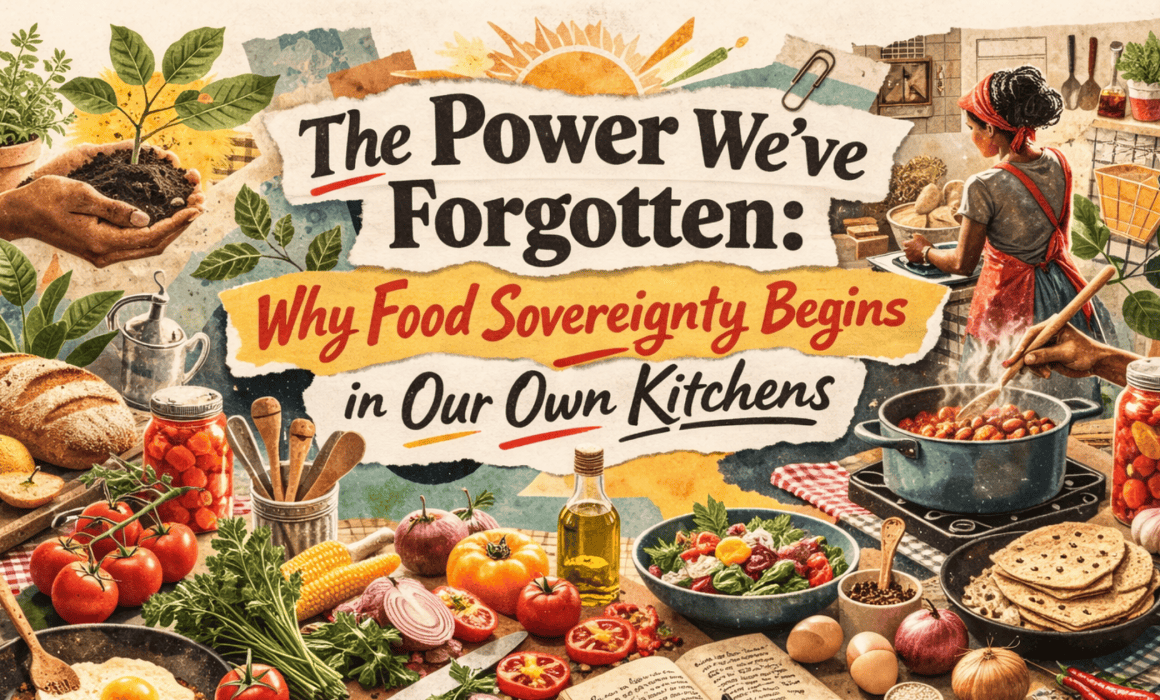
The Power We’ve Forgotten: Why Food Sovereignty Begins in Our Own Kitchens

What if the most powerful tool we have for stronger communities is sitting right in our kitchens and we’ve overlooked it?

That question is what pushed me toward the Master Food Preserver Program through Oregon State University Extension. I wanted to understand what really drives resilience in a food system, and why some communities can bounce back faster during crises while others struggle.

The deeper I go, the more I see that food sovereignty sits at the center of it all.

Food sovereignty matters because it shifts power back to the people who eat the food, grow the food, and rely on the land. It’s about communities having real control over how their food is produced, who benefits, and whether the system supports long-term wellbeing instead of extraction.

Here’s what I’m learning — and why I think more of us should be paying attention.

1. It protects community resilience

When food systems depend on long supply chains, corporate consolidation, and distant decision-makers, communities get hit hardest during disruptions. Local control means people can adapt, stay fed, and stay steady no matter what’s happening globally.

2. It supports cultural survival

Food traditions carry identity, memory, and belonging. When communities maintain control over seeds, land access, and agricultural practices, they safeguard cultural knowledge that would otherwise disappear.

3. It keeps wealth circulating locally

Local growers and producers retain more of the value instead of watching profits flow to outside corporations. This matters for rural towns and historically marginalized communities trying to build long-term economic stability.

4. It strengthens public health

Food sovereignty prioritizes nutrient-dense, culturally relevant food over ultra-processed products. That shows up directly in health outcomes and quality of life.

5. It protects land, water, and future generations

Communities that depend on local land tend to take better care of it. Food sovereignty encourages regenerative practices, biodiversity, seed saving, and stewardship instead of short-term depletion.

6. It addresses equity and power

Many communities — especially Indigenous, immigrant, and low-income groups — have been pushed out of land ownership and food decision-making. Food sovereignty is part of restoring balance and agency.

7. It creates space for local entrepreneurship

When small farms, food producers, and makers aren’t squeezed out by industrial agriculture, they innovate. They create micro-businesses, jobs, and regional economic strength.

How food preservation fits in

Canning, freezing, dehydrating, fermenting — these aren’t just kitchen skills. They are community stabilizers. They help families stretch budgets, reduce waste, store seasonal abundance, and stay connected to the land and growers around them.

That’s why I’m studying with the Master Food Preserver Program and why I’ll be volunteering with Oregon State University Extension this summer. I want to understand how these skills support community wellbeing — and help more people access them.

If you’re curious about food sovereignty, local food systems, or food preservation, come learn with me. I’ll be sharing what I discover throughout the season. Let’s explore how much stronger our communities can be when we reclaim the knowledge that keeps us nourished.
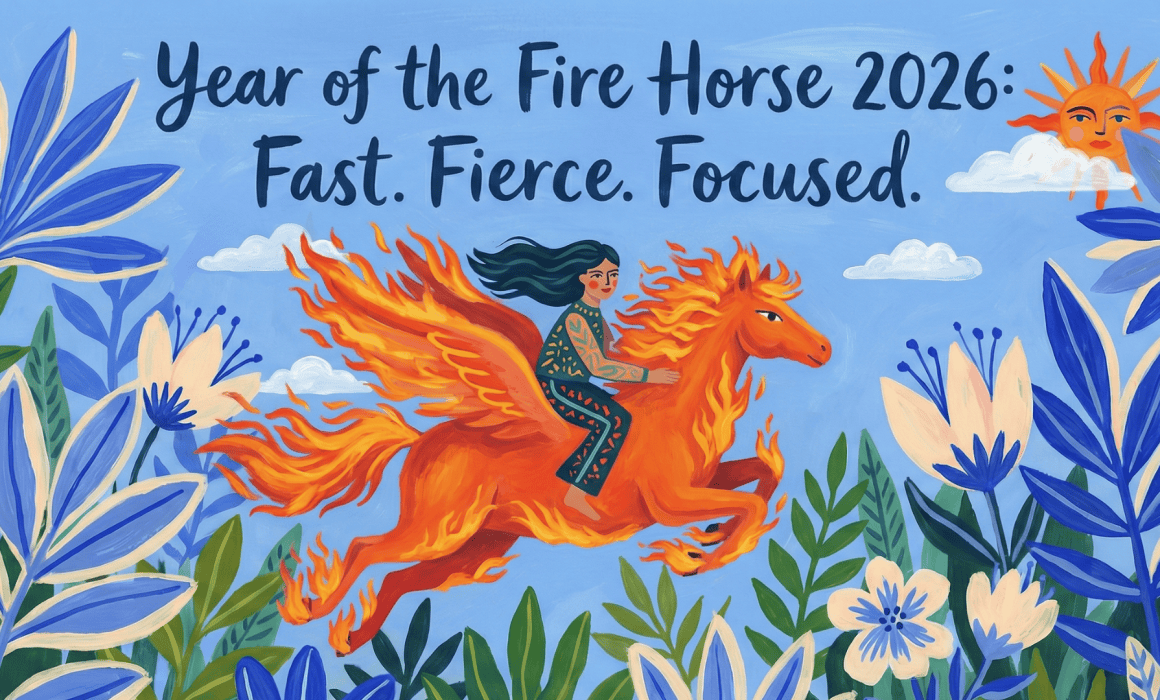

Why the Year of the Fire Horse Is a Catalyst for Breakthroughs

2026 is the Year of the Fire Horse. For those of us who follow the Lunar Calendar, the Year of the Fire Horse isn’t just another year. It’s an energetic flashpoint: a period of significant cultural shift, rapid innovation, and a collective breaking of old patterns.

If you’re a business owner, the arrival of the Fire Horse signals a pivot from the introspective “planning” phases of previous years to a high-octane, action-oriented season.

This is the year where the momentum you’ve been building in the past finally takes off.

A Rare and Potent Intersection

To understand why 2026 is significant, we have to look at the intersection of the Horse and the Fire element in Chinese cosmology. The Horse inherently represents speed, independence, and the drive to cover vast distances. When the element of Fire is introduced, an event that occurs only once every 60 years, those traits are amplified by brilliance, passion, and heat.

Culturally, for entrepreneurs and leaders who follow the Lunar cycles, the Fire Horse is synonymous with decisive action. This is not a time to “wait and see.” It is a season that favors the bold, the assertive, and the innovative. It is seen as a transformative period that demands leadership and rewards those who have the courage to make resolutions a reality.

Harnessing the Year’s Fire Energy

You don’t need to be an observer of Chinese astrology to recognize that markets and cultures move in waves. Think of 2026 as a collective surge in momentum.

When the prevailing energy is fast-paced and innovative, the cost of hesitation increases. This is a time to move with the current rather than standing on the sidelines. It’s an external, action-oriented follow-up to the quieter, more introspective years we’ve recently navigated.

7 Strategies for Decisive Action in 2026

To lead effectively in a high-intensity year, your strategy must move from theory to execution. Here are seven ways to harness this period of transformation.

1. Prioritize execution over deliberation.

The Fire Horse favors the swift. If you’ve been over-analyzing a new direction or a major project, 2026 is the time to commit. High-energy cycles move faster than your ability to perfect a plan. Launch, gather intelligence in real-time, and refine as you go. Innovation happens in the doing, not the dreaming.

2. Heighten your visibility and authority.

Fire provides its own light. This is a year for assertive leadership. It’s the time to claim your space in the market, share your vision with conviction, and be the primary voice in your industry. If you’ve been playing small, this cycle provides the external heat needed to expand and amplify your reach.

3. Shorten the innovation cycle.

How long does it take for an idea to become a reality in your business? In a fast-paced period, agility is your greatest asset. Audit your internal processes and remove the friction that slows down progress. The goal is to create a business that can pivot and accelerate without the weight of outdated bureaucracy.

4. Build strategic alliances.

Dynamic energy is amplified when it is shared. Look for partnerships with other high-initiative leaders who match your pace. Collaborations create a slipstream effect – the collective momentum of a strong group will carry you through challenges much faster than working in isolation.

5. Maintain radical focus.

The danger of a Fire year is that energy can become scattered. Without focus, a spark becomes a wildfire that burns out without producing results. Use this year to put on blinders toward distractions. Identify your most ambitious goals and ruthlessly filter out anything that don’t align with your intended finish line.

6. Manage your energy proactively.

A high-intensity year demands massive stamina. Because the pace is faster, the risk of exhaustion is real. To keep your fire burning through the fourth quarter, you must treat your recovery with the same seriousness as your production. High-stakes leadership requires a balance of intense action and intentional rest.

7. Burn away old patterns.

Fire’s primary role is transformation through clearing. Use 2026 to identify the habits, services, or systems that are dead weight. If it doesn’t contribute to your momentum, let it go. Breaking old patterns is a prerequisite for making a significant breakthrough.

What Are You Waiting For?

The Year of the Fire Horse is a unique opportunity to achieve in months what usually takes years. It is a period defined by enthusiasm, progress, and the courage to pursue ambitious goals.

The conditions are set for a breakthrough. The question is: Are you ready to take the lead and move with the season’s momentum? If not, what in the world are you waiting for?

Authentic brand storytelling and an online presence that resonates powerfully with your audience will fuel your Fire Horse energy this year. Fuel that fire by collaborating with Sacred Fire Creative.


5 Vital Lessons Every Digital Marketer Can Learn from Zohran Mamdani

How did a young unknown like Zohran Mamdani win the heart of a city and become its mayor?

On Tuesday, November 4, Mamdani made history by becoming the youngest mayor-elect of New York City at age 33. Not only that, he became the city’s first Muslim mayor with South Asian heritage. With 50.4% of the vote over opponent Andrew Cuomo’s 41.6%, Mamdani’s win is a signal that New Yorkers are ready to embrace something new.

A victory as resounding as Mamdani’s is unusual for someone who was virtually unknown in NYC just a year ago. So how did Zohran clinch it?

We can find one of the answers in the way he branded his campaign. And his branding is a masterclass in show-stopping, avant-garde digital marketing.

Here are five lessons we learned from Zohran Mamdani’s mayoral campaign that every digital marketer needs to know.

1.   Root Your Brand in Real Culture

The typical politician’s campaign sported blue, red, and white – the colors of the US flag, signifying patriotism.

Mandani used a different color palette that looked like New York itself. It echoed the yellows of NYC cabs, the blue of MetroCards, the red of corner-store awnings. Even his posters looked like something you’d see taped to a light pole in Queens. The wordmark even appeared hand-lettered like a neighborhood signage.

By using NYC’s visual language, Mamdani told voters that he’s one of them. It was authenticity made visible.

Lesson:

Your brand isn’t just what you say. It’s what you reflect back to your audience. The most effective campaigns are grounded in the culture, humor, and rhythm of the people they serve.

So, use design cues that your audience already loves and resonates with. Speak in their language, not in marketing jargon.

Zohran for New York City wordmark


2.   Make Your Two Seconds Count

You only have two seconds to capture your audience’s attention. If you don’t stop their scroll in two seconds, you’re lost.

Mamdani’s team understands that busy New Yorkers don’t have time to read through blocks of text. They’d only glance at them for two seconds. That meant every word, line, and color had to count.

So they stripped it down. They used minimal copy and bold visuals. They kept their message clear. And they adopted Zohran as Mamdani’s mononym.

Lesson:

Whatever campaign you’re running, you need to understand that your audience is busy and preoccupied. They’re scrolling, skimming, glancing. You’ve got two seconds to make them stop.

Ask yourself: If someone sees my ad for only two seconds, what message sticks? Can they tell what I do, who I serve, and why it matters?

Every post, headline, or reel should pass the “two-second rule.”

3.   Keep Your Designs Consistent

One logo alone doesn’t make a brand, and Mamdani’s campaign proved it.

Every element, from posters to tote bags to social media posts, was part of a consistent system. The colors, typography, and tone all reinforced the same story. The result was unmistakable cohesion.

People instantly recognized the brand as Mamdani’s.

Lesson:

Think of your brand as a living system that expresses itself across platforms.

Your emails should sound like your Instagram posts.

Your proposal templates should reflect your website design.

Your videos should echo your brand tone and palette.

Cohesion creates credibility. When everything looks and feels connected, your audience senses that you’re intentional. And that builds trust.

4.   Let Personality Lead the Design

One thing that set Mamdani apart was how personally involved he was in his branding. He actively helped shape it. The campaign reflected his personality: youthful, grassroots, empathetic, and a little rebellious.

People responded. They didn’t just like the visuals. They liked him.

Lesson:

Your brand should feel like a person your audience wants to know.

Infuse your personality into your copy and visuals. Show the people behind the brand: the artists, the strategists, the dreamers. Let your values and quirks shine through.

Audiences crave human connection. The more your brand feels alive, the more they’ll engage.

5.   Be Daring

Perhaps the boldest thing that Mamdani’s campaign did was to reject political branding convention entirely.

No flags. No eagles. No polished slogans. What he had were hand-drawn letters, bold urban color, and joyfully imperfect designs. It looked nothing like a political campaign, and that’s exactly why it worked.

Lesson:

In a sea of sameness, difference is your superpower.

Find what everyone else in your niche is doing, then go the opposite direction. Don’t be afraid to show personality or challenge expectations. Let your authenticity lead the creativity.

Breaking the mold doesn’t mean being outrageous, especially when you’re being true to what your brand is.

Have the Courage to Be Real

Zohran Mamdani’s branding campaign succeeded because it looked, sounded, and felt like the community it represented. It dared to look human in a world of glossy sameness.

That’s the real takeaway for digital marketers.

Whether you’re a creative entrepreneur, a small business owner, or a digital marketer building brands for others, remember this:

People don’t fall in love with perfect brands. They fall in love with honest ones.

So, which of these five lessons will you bring to your next marketing campaign?

Got a show-stopping story that you want more people to know about? Collaborate with Sacred Fire Creative and make your story shine.


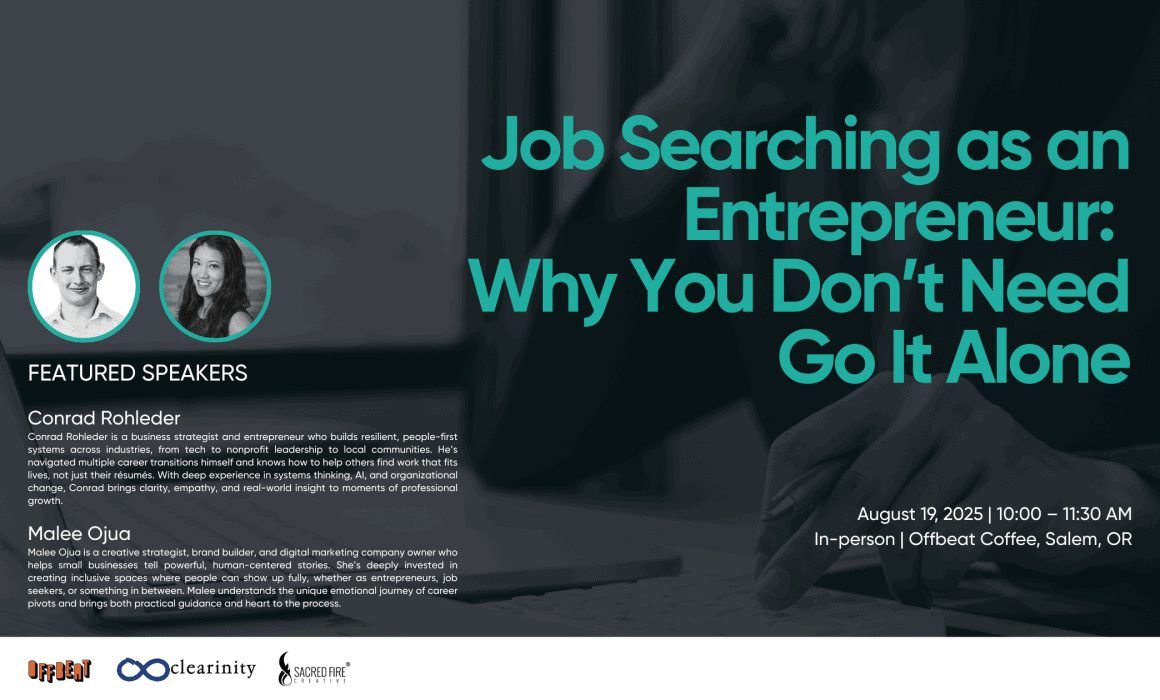
Job Searching as an Entrepreneur: Why You Don’t Need Go It Alone

You were prepared for change.

You knew this next chapter wouldn’t be easy.

But nothing quite prepares you for job searching when you’re an entrepreneur.

You thought your biggest challenge would be updating your résumé.

Instead, it’s the quiet, grinding uncertainty that no one warned you about.

The job search isn’t just a search. It’s a test of resilience.

You apply for roles that sound like a fit. You try to explain what you did as a founder without sounding like you’re overqualified – or worse, like you’re starting over after what the interviewer may assume as a failure.

You wonder if the recruiter on the other side understands what it meant to build a brand from nothing, lead a team, manage budgets, grow revenue, solve crises.

You wonder if they can see the value behind the title of “Founder.”

You hit submit and wait. And wait. And wait.

Sometimes there’s a rejection. More often, just silence.

You start to question your instincts.

You rewrite your story. Again.

You try to stay upbeat for the next interview, even as your confidence thins.

And you begin to ask: Is it just me? Am I doing this wrong?

It’s not just you. And you’re not doing it wrong.

Job searching as an entrepreneur is uniquely challenging.

Not because you lack skills, but because traditional hiring systems aren’t built to understand non-traditional paths.

But here’s what no one tells you: You don’t need to muscle through this alone.

You don’t have to.

The missing piece in your job search might not be a better resume or a new strategy.

It might be a support circle, a space where you’re reminded of what you bring to the table, even when the world feels unsure of where to seat you.

What can support circles do for you?

A strong circle doesn’t just offer encouragement. It changes the experience of job searching as an entrepreneur in real, tangible ways.

First, you gain clarity. Talking with others helps you see yourself and your transferable skills more clearly.

You also learn how to tell your story. A support group helps you shape your founder journey into a compelling narrative that hiring managers can understand.

You get unstuck. Whether it’s a new connection, a practical tip, or just someone who’s been there, the right support gives you momentum.

Lastly, you feel human again. Being around others who get it helps you shake off the isolation, the imposter syndrome, and maybe even the shame that job searching can trigger.

You’ve carried enough alone. It’s time to let someone help you.

Finding the right support is what Job Searching for Entrepreneurs is all about. It’s not another job-searching, resume-writing workshop.

It’s a gathering place for people who are in the thick of the search, who’ve been refreshing job boards, second-guessing themselves, and wondering what’s next.

It’s a chance to talk about what really makes a difference: connection, community, and support that actually understands where you’re coming from.

In the upcoming session of this conversation, titled “Finding Support as a Job-Searching Entrepreneur,” we’ll explore:

  • What makes the job search uniquely hard for founders
  • How to find the right people to walk this path with you
  • Where to look for mentorship, guidance, and belonging
  • How to ask for help in a way that feels empowering

This session is on August 19, 2025, at Offbeat Coffee in Salem, OR, co-facilitated by Conrad Rohleder of Clearinity and Malee Ojua of Sacred Fire Creative.

The job search is hard.

But you don’t have to do it alone.

And you were never meant to.

Join us for this part of Job Searching for Entrepreneurs.

Let this be the session that reminds you that you’re not stuck.

You’re evolving. And there are people who see what you bring, even when the hiring algorithm doesn’t.

Joining is free. RSVP today.


Oregon Startup Conference 2025: Building Strong Roots for the Future of Community

At the Oregon Startup Conference, held June 20, 2025, we witnessed something rare.

It wasn’t just a gathering of entrepreneurs. It was a moment—a shared breath—where hope, vulnerability, and possibility met in the same room.

Founders came with big dreams and unfinished ideas.

Mentors came with open hands and honest words.

Strangers became collaborators. Ideas became momentum.

And what started as a conference became something much deeper: community.

One quote echoed through our hearts all day long:

“Even if I knew that tomorrow the world would go into pieces, I would still plant my apple tree.” — Martin Luther King Jr.

That spirit was everywhere. In every pitch, every breakout session, every side conversation over coffee. People chose to plant something—an idea, a connection, a belief that what they’re building matters.

We created space for people to show up as they are. No polish required. Just passion, persistence, and purpose.

And that’s what made this event unforgettable.

Because at the heart of every startup is a voice. A story. A reason for doing the hard thing anyway.

At Sacred Fire Creative, that’s what we’re here to nurture: the voice that connects, the story that resonates, the brand that builds bridges between humans.

🧡 If you’re ready to find your authentic voice and use it to spark connection in your community, we’d love to collaborate.

Contact us today. Let’s build something beautiful together.


How to Ace the Job Interview as an Entrepreneur

For years, your job interview was a client pitch.

You didn’t talk about your job qualifications. Instead, you showed them.

You didn’t wait to be hired to show what you can do. Instead, you built a business around what you can do.

You wore every hat, made every decision, and held the full weight of success (and failure) on your shoulders.

But now, something has shifted.

Maybe you’re craving stability. Maybe you’re burned out. Or maybe, for the first time in a long time, you’re curious about what it might feel like to be part of a team again – this time, not as the leader, but as a contributor with clear boundaries, shared goals, and room to breathe.

And that’s brought you here: preparing to reenter the world of traditional employment.

But let’s be honest. Job interviews hit differently when you’ve been the boss.

In the first part of this blog series, we talked about the resume and the cover letter. Here, we’re going to tackle the job interview.

Why Interviews Are Uniquely Challenging for Entrepreneurs

When you’re used to creating your own opportunities, sitting across from someone evaluating your qualifications can make you feel vulnerable, even strange. 

There’s a quiet fear underneath.

Will they understand my story? Will they think I failed?

Am I too much? Or not enough?

These are common and completely normal questions for entrepreneurs making this leap.

Here’s why the interview stage can feel especially hard:

  1. Your career path is nonlinear. Traditional roles follow a ladder. Yours was more like a jungle gym.
  2. You’re afraid they’ll think you can’t follow. You’re no longer the CEO, but that doesn’t mean you can’t thrive in a supportive role. Still, that transition can be hard to communicate.

What Hiring Managers Need to Hear

You bring incredible value to the table. But it’s up to you to make that visible.

Here’s how to make your experience resonate in the interview:

Reframe your story.

Don’t just say, “I ran a business.” Translate it.

I launched and scaled a client-focused brand, led a team of five, managed a $100K budget, and built a marketing system that generated consistent leads through organic social media.

Be specific with your story and focus on outcomes. Connect your experience to the job you’re applying for.

Address the elephant in the room.

If your business closed or paused, acknowledge it confidently.

After several meaningful years in entrepreneurship, I’m choosing this next chapter intentionally. I’m excited to contribute in a focused role where I can apply my experience and collaborate with a team.

Most employers aren’t put off by your business pausing, closing, or being set aside. They just want to understand your “why” and know you’re ready to show up fully.

Shift the narrative from “boss” to “team player.”

One of the biggest assumptions you may face is that you won’t take direction or adapt well to the hierarchy.

Prove them wrong by sharing examples of collaborative partnerships, taking client feedback, and learning from mentors or peer networks.

Let them see your willingness to grow within a team, without needing to lead everything.

Use the STAR Method to Tell Compelling Stories

Entrepreneurs are natural storytellers. But job interviews require a more structured kind of storytelling.

That’s where the STAR method comes in.

STAR stands for:

  • Situation: What was going on?
  • Task: What challenge or goal were you facing?
  • Action: What specific steps did you take?
  • Result: What was the outcome? 

This method helps you clearly demonstrate your value through real-life experiences. And that’s something entrepreneurs have in abundance.

Let’s break it down:

SITUATION: Set the Scene.

“Our customer retention rates were dropping, and we realized our onboarding process wasn’t setting clients up for success.”

TASK: Define the Challenge or Goal.

“I need to redesign the onboarding system to improve retention and create a more seamless client experience.”

ACTION: Describe What You Did. 

“I mapped out the existing process, created a new step-by-step welcome journey, and trained my team on delivering it consistently.”

RESULT: Share the Outcome.

“Client retention improved by 35% over the next six months, and support tickets dropped by half.”

Here are a few STAR tips that entrepreneurs can use during the job interview:

  1. Choose diverse stories. Highlight collaborations, problem-solving, and resilience, not just your wins.
  2. Tailor your examples. Connect them directly to the skills the job requires.
  3. Practice out loud. STAR stories are designed to be spoken so they can be remembered.
  4. Stay focused. The structure helps you avoid rambling, a common habit among founders.

Using the STAR method turns your entrepreneurial experience into concise, impressive stories that resonate with hiring managers. It shows that you’re not just experienced; you’re self-aware, coachable, and ready to contribute. 

Find the Right Support

Transitioning from entrepreneurship to traditional employment doesn’t just involve a career shift. It’s diving into an identity shift.

And it’s okay to need help navigating it.

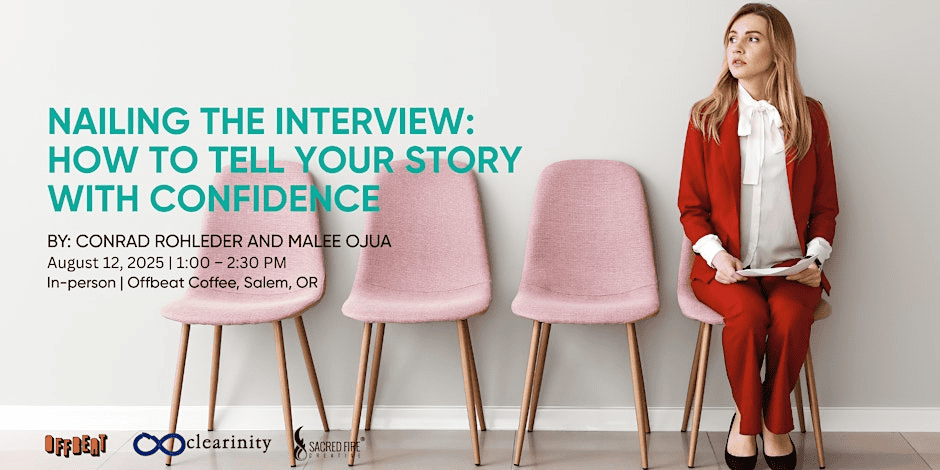
That’s why we’re hosting the second session in our Job Searching for Entrepreneurs series: Nailing the Interview: How to Tell Your Story with Confidence.

Whether you’re getting ready for your first interview in years or struggling to translate your founder journey into corporate language, this event is for you. We’ll walk through real examples and hold space for the complexity of this transition without judgment. 

This second session is on August 12, 2025, at Offbeat Coffee in Salem, OR. Just like the first session, it will be led by Conrad Rohleder of Clearinity and Malee Ojua of Sacred Fire Creative.

Come as you are – curious, cautious, or completely overwhelmed. You’ll leave with tools, language, and renewed clarity for your next step.

Because you’re not starting over.

You’re starting fresh, with experience, perspective, and something powerful to offer.

RSVP here.


Scaling with Integrity: How Kristy Runge Helped Build HelloCare’s Operational Backbone

Kristy Runge didn’t just co-found a caregiving company. She architected its operational success.

With decades of experience in healthcare and business leadership, Kristy understood that meaningful care doesn’t scale on goodwill alone. It takes rigorous systems, thoughtful hiring, quality assurance, and leadership that balances compassion with performance.

That’s the foundation she helped build at HelloCare, a company now serving families in multiple cities across Oregon.

The System Behind the Soul

While HelloCare is known for its deeply personal, people-first approach to in-home care, much of that consistency comes from the operational design that Kristy helped create.

She implemented systems and processes at HelloCare that ensure quality at scale without sacrificing heart. Her leadership bridges the emotional weight of caregiving with the accountability and structure required to grow a service-based business that can last.

It’s that rare balance between heart and logistics that has made HelloCare not just sustainable but replicable.

Why Founders Should Hear Her Speak at the Oregon Startup Conference

Kristy Runge will be featured on the Success Panel at the Oregon Startup Conference on June 20, 2025, at George Fox University.

There, she will offer founders a transparent look into what it really takes to scale a mission-driven operation.

She’ll speak to the practical aspects that many early-stage businesses overlook: operational workflows, systems thinking, hiring for values and competence, and building processes that grow with your team – not against them. 

If you’re an entrepreneur building in the service space, Kristy’s insights are both inspiring and actionable. She’s walked the road of taking a community-centered idea and turning it into a business with backbone. And she’s ready to share how.

Hear from founders like Kristy Runge, who know how to build for both heart and scale.

Register at www.oregonstartupconference.com.


Slumberkins: How Two Moms Built a Global Brand for Early Learning and Emotional Wellness

In the heart of the Pacific Northwest, two lifelong friends transformed a shared passion for child development into a thriving business.

Kelly Oriard and Callie Christensen, co-founders of Slumberkins, have created a brand that not only comforts children but also empowers them with emotional intelligence.

Their journey from educators to entrepreneurs exemplifies the innovative spirit that defines the local startup ecosystem.

The Genesis of Slumberkins

Kelly and Callie are, first and foremost, friends. It was a friendship that began in childhood. Their paths eventually diverged: Kelly became a school counselor and family therapist in Portland, OR, while Callie built a career as a special education teacher in Vancouver, WA.

However, a mutual recognition of the lack of engaging emotional learning tools for children brought them back together. They began crafting stories and sewing plush creatures that embodied therapeutic concepts in 2015, thus laying the foundation for Slumberkins. Their initial creations, Bigfoot and Sloth, addressed self-esteem and relaxation. These characters resonated with parents and children alike. 

In 2017, Kelly and Callie took their concept to Shark Tank. While they were not able to secure an investment, they pushed forward. That decision led to the development of a comprehensive product line that includes plushies, books, educational resources, and an Emmy-nominated television series produced by The Jim Henson Company. Slumberkins has since become a trusted resource for over 1.5 million families, offering tools that foster resilience and emotional growth in children.

In 2022, they brought in a CEO to focus on the business side of things at Slumberkins. Kelly transitioned into the Chief Therapeutic Officer, while Callie became the Chief Brand Officer.

Impact on the Oregon Startup Community

Beyond their business success, Kelly and Callie are active contributors to the local entrepreneurial landscape. They have shared their insights at events like the Bend Venture Conference, Portland Startup Week, and Starve Ups, providing guidance on fundraising and brand development.

Their efforts have not gone unnoticed. In 2022, they received the Entrepreneurial Achievement Award from the Oregon Entrepreneurs Network, recognizing their significant contributions to the state’s innovation economy. Their inclusion in Inc.’s 2023 Female Founders 200 List further underscores their influence and dedication to fostering a supportive environment for women in business.

Meet Kelly and Callie at the Oregon Startup Conference

Kelly and Callie’s journey embodies the essence of entrepreneurial success: identifying a need, creating a solution, and scaling it with authenticity and purpose. Their experience in building a mission-driven brand that prioritizes emotional wellness offers invaluable lessons for startups aiming to make a meaningful impact.

Their presence on the Success Panel at the Oregon Startup Conference will provide attendees with practical strategies and inspiration drawn from real-world experience.

Don’t miss the opportunity to engage with Kelly Oriard and Callie Christensen at the conference on June 20, 2025, at George Fox University. Their story is a testament to the power of combining passion with purpose, and their insights could be the catalyst for your own entrepreneurial journey.

Register for the Oregon Startup Conference.


Tech that Heals, Leadership that Elevates: How Rachel Dreilinger Is Bridging Innovation and Inclusion in MedTech

When Rachel Dreilinger co-founded NeuraMedica, she wasn’t just setting out to solve a surgical problem. She was aiming to change the way innovation works for patients, providers, and underrepresented entrepreneurs like herself.

A biomedical engineer by training and a systems thinker by instinct, Rachel brings over two decades of experience in medical development to her role as NeuraMedica’s CEO. Her path has taken her from engineering labs to executive leadership, but the heart of her work has always remained the same.

And that is to use technology to make people’s lives better.

A Simple Idea with Profound Impact

At the center of NeuraMedica’s story is DuraFuse™, an elegantly engineered bioabsorbable clip that offers a safer, faster alternative to traditional sutures for closing the dura mater during spinal surgery.

Designed to reduce the risk of cerebrospinal fluid leaks that come with traditional spinal surgery and improve surgical efficiency, DuraFuse is FDA-cleared and commercially viable. It’s a milestone that only a handful of startups in this corner of the medical space ever reach.

The journey to get there wasn’t simple.

Rachel and her co-founder, neurosurgeon Dr. Neil Roundy, began with a prototype and a bold idea. Backed by grants and early collaborations with Oregon Health & Science University, they methodically advanced their technology through years of clinical research, testing, and refinement.

Leading with Vision and Roots

Rachel is a proud member of the Diné (Navajo) Nation and one of the few Native American women leading a medical technology company. That perspective shapes everything she does, from how she leads her team to how she shows up for the broader community.

She’s a vocal advocate for inclusion in entrepreneurship and STEM, especially for women and Indigenous founders. Her leadership is visible not only inside NeuraMedica but also across Oregon’s startup ecosystem. Rachel frequently participates in regional pitch events, panels, and mentorship programs, where she offers real-world guidance to founders navigating similar hurdles.

Rachel has been recognized for that work, too. NeuraMedica was a finalist for Oregon Entrepreneurs Network’s Angel Oregon Life & Bioscience Investment in 2024. This is a clear sign that the innovation coming out of Mid-Willamette Valley is gaining significant attention.

Meet Rachel at the Oregon Startup Conference

On June 20, 2025, Rachel will be part of the Success Panel of the Oregon Startup Conference at George Fox University.

She does more than represent the future of MedTech. She’s helping to shape it. Her story is a reminder that great startups aren’t only built on good ideas. They’re built on perseverance, collaboration, and a vision that extends beyond the bottom line.

Don’t miss the opportunity to connect with Rachel Dreilinger. She’s someone worth knowing, whether you’re passionate about healthcare innovation, inclusive entrepreneurship, or just want to meet someone who is changing the game in their field.

Register for the Oregon Startup Conference today.


Privacy Settings
We use cookies to enhance your experience while using our website. If you are using our Services via a browser you can restrict, block or remove cookies through your web browser settings. We also use content and scripts from third parties that may use tracking technologies. You can selectively provide your consent below to allow such third party embeds. For complete information about the cookies we use, data we collect and how we process them, please check our Privacy Policy
Youtube
Consent to display content from Youtube
Vimeo
Consent to display content from Vimeo
Google Maps
Consent to display content from Google