Category: Profiles

Ukraine’s Volodymyr Zelenskyy: A Leader of Strong Character

When Volodymyr Zelenskyy ran for the Ukrainian presidency in 2019, no one from Ukraine’s political establishment took him seriously. He had a law degree and was a household name, but he had no political experience.

In fact, the closest that Zelenskyy got to politics before his presidential campaign was playing the head of state in a satirical sitcom. That’s because he’s a comedic actor—a staple of Ukrainian and Russian-language rom-coms. He even won Ukraine’s version of Dancing with the Stars in 2006.

What does a comedian know about running a country, after all?

Apparently, Zelenskyy knew enough to convince 73% of Ukraine’s voters to elect him president. He struggled early in his term, however, with his controversial decisions disillusioning many Ukrainians.

But when Russia invaded the country on February 24, 2022, Zelenskyy showed a side of himself that his compatriots hadn’t seen before—that their president is a leader of strong character.

How did Volodymyr Zelenskyy display character-based leadership in the face of this enormous crisis? Here are five examples.

1. He showed courage.

A leader of strong character shows courage when it matters the most.

As Russian troops made their way to Kyiv, Ukraine’s capital city, the US offered to evacuate Zelenskyy for his safety. His response: “I need ammunition, not a ride.”

He’s aware that his life is in danger, yet he refused to be president in exile. He knows that staying in Kyiv puts him in a better position to serve his country.

2. He is authentic.

A leader of strong character is willing to show that they, too, are human.

Zelenskyy may have shown courage as expected of a wartime president. But this doesn’t mean he’s unbothered by what’s going on. His Instagram videos clearly show him as worried and exhausted. He has dark circles under his eyes, and his stubble is days old. He also switched from his usual presidential suits to military fatigues.

He shows that, just like his compatriots, he feels the physical and mental toll of the conflict with Russia. He also expresses that he doesn’t see glory in war.

3. He knows how to reach people.

A leader of strong character is an effective communicator.

Observers have seen Zelenskyy use social media to great effect. He frequently posts on Instagram and Twitter to show the world what’s going on in Ukraine amid the invasion. Aside from posting regularly, he uses language that will resonate with his audience.

In his videos, his speeches are full of gravity and passion, but he speaks calmly, plainly, and doesn’t use rhetorical language. His soundbites are quotable and tweetable, but they aren’t empty of meaning.

4. He is on the ground.

A leader of strong character works at the frontlines and isn’t afraid to get their hands dirty.

During the first few days of the invasion, Zelenskyy posted videos of himself running around the streets of Kyiv. He shot the videos as selfies from his phone.

Through his videos, Zelenskyy meant to show the actual situation in Kyiv from the ground. He also wanted people to see that he’s not always hunkered down in his bunker and he knows firsthand what’s really going on.

5. He inspires.

A leader of strong character inspires others to action.

Zelenskyy has shown Ukrainians and the whole world that he has the grit to help his country survive the Russian aggression. He may have stumbled early in his term, but he’s making up for it now. His show of courage, his calm demeanor, and his presence in Kyiv despite the risks have inspired Ukrainians to resist.

The Ukrainians aren’t the only ones inspired by Zelenskyy. Governments around the world have imposed various sanctions on Russia. Multinational corporations in different sectors, from technology to energy to fashion, have either pulled out of or suspended their Russian operations. Elon Musk activated SpaceX’s satellite internet service in Ukraine. The hacktivist collective Anonymous launched cyberwarfare in Russia as well.


Motivational speaker and former politician Les Brown once said, “Our ability to handle life’s challenges is a measure of our strength of character.” The Russian invasion of Ukraine is only a few days old, and no one knows for sure how it will turn out. But through Volodymyr Zelenskyy, the conflict has given the world a true example of a leader of strong character.

Kamonwan Wipulakorn: A Leader’s Profile

A well-respected figure in the hospitality industry, Kamonwan Wipulakorn started her career in finance and is now a prominent leader in the Southeast Asian hotel and tourism industry. Notably, she is also one of the few female executives in this male-dominated field.

Although she has a long list of accomplishments under her belt, she is most well-known for her former position as the president and director of Erawan Group. Erawan is Thailand’s leading hotel investment company with a diversified hotel portfolio across Southeast Asia. Kamonwan was also included in Prospects Top 10 Women in Entrepreneurs in Southeast Asia.

Kamonwan’s educational background and professional start

In October 2021, she was appointed Managing Director of Bound and Beyond Public Company Limited (BEYOND). She is also Vision CEO of business investor One Origin and an independent director of Star Petroleum Refining Public Limited, a leading producer of petroleum products in Thailand.

She graduated with a bachelor’s degree from Chulalongkorn University in Thailand and obtained her MBA from Western Illinois University in the USA. Even after these accomplishments, she didn’t stop learning and continued to pursue self-development. She also attended the Certificate Harvard Executive Program in Harvard Business School and the Certificate Stanford Executive Program at Stanford University. Her impressive educational background is a testament to her dedication to continuous learning and improvement.

Kamonwan started her professional career as an associate at a brokerage firm more than thirty years ago and has worked her way up ever since. “I’ve worked in the financial field for 15 years, mainly in investment advisory,” Kamonwan said in an interview with the Bangkok Post. “I left the banks in 2002 to become the chief financial officer of my client’s petrochemical company for five years. But I always had an interest in the hotel business.”

Joining and leading Erawan

Kamonwan joined Erawan in 2008 when she heard about the vacant position of Chief Financial Officer in the hospitality company. After she entered, she continued climbing the corporate ladder. In 2011, she became president and director of the group and joined senior management in 2013.

Kamonwan calls her management style adaptable and always tailored to the situation she faces. She left Erawan in 2018 and continued to hold director-level positions in other companies. Her current positions are Director of Origin Property PLC, Board Member of Padaeng Industry PCL, and Managing Director of BEYOND.

While she was with Erawan, she was essential in driving the group forward and spearheading its expansion in Southeast Asia. She oversaw more than 7,000 hotel rooms and 6,000 workers in Thailand and the Philippines during her time as president of Erawan.

She expounded on how she works with people around and under her management. “My style is very flexible. It’s my job is lead my team to achieve the result we want, so I can be direct and diplomatic at the same time. My other important responsibility is to build my team to succeed me, so coaching and empathy are essential in my routine,” Kamonwan shared.

A goal of learning every day

Her life philosophy of learning and re-learning for self-improvement is reflected in both her personal and professional life. She lives with the goal of learning every day because the hotel industry and the world around her are constantly changing. The only way to keep up is to be open to learning. She believes that the best way to work with uncertainty is to keep learning. Kamonwan also wants others to have this mindset, and she focused much of her attention on staff development.

Another one of her key goals with Erawan was to create and implement sustainable practices throughout its operations. She wanted to develop a sustainable platform for the group to carry it well into the future. The group also gives back to local communities and is mindful that each property should benefit the local community. From hotel construction to operations, the group made sure that locals would gain income from the project. Locals were employed from the hotels’ building phase, and some were employed by the hotels when they were operational.

A product of Thailand’s openness to female leadership

Kamonwan has also shared her experience being a top Thai executive and if being a woman affected her career path in any way. “I’ve never felt that there were barriers for women getting into leadership roles in Thailand, but I do see it is an issue elsewhere. In Thailand in general, you see more and more women given the opportunity to run organizations. We have a very open work culture and are probably in the top 10 countries in the world for the number of women in leadership roles,” she said.

It’s important to note that Thailand is one of the leaders globally that accepts and supports women in leadership roles. According to studies, women hold 37% percent of leadership roles in the country, compared to 24% globally. In terms of education, it ranks first in the world of enrollment of women in higher education. For every man enrolled in university, 1.41 women are enrolled as well.

The world can learn from Thailand’s attitude towards women leading companies and in other leadership positions. Kamonwan explained how the decision-making process works in Thai corporations. “We see diversity at all levels. But in other aspects, we welcome comments from everyone. We don’t do top-down decision-making. Everyone in the company drives the business. Every decision or project, it comes from a team, not from one person. The way we make decisions comes from the different opinions in the team, and it is always cross-functional, and everyone has the same chance to get their views across,” she said in an interview in 2019.

“This approach is quite common, especially among the big corporations in Thailand. That’s why they become so big; I believe that if the organization does not embrace diversity, it is difficult to grow. For family businesses that haven’t yet transformed into that corporate environment, it may be different. There is perhaps not so much diversity there,” Kamonwan explained.

Valuing inclusiveness

Aside from gender diversity, Thai companies value inclusiveness as well. Kamonwan emphasized that it’s more about respecting everyone’s opinion than seeing decision-making as solely coming from management. She has also imbibed this in her own management style and empowers the people around her. For example, when she was working in Erawan, they conducted town hall meetings to encourage employees to give their feedback and comments to management.

Kamonwan is a woman everyone can look up to and should admire. From finance to hospitality, and from an entry-level position to CEO, she made her way to the top through hard work and an open leadership style. Even if she’s leading top corporations, she also makes time for her family. She enjoys traveling with them around Thailand and other countries.

Openness, continuous learning, self-improvement, and flexibility are recurring themes in Kamonwan’s life. Because of these admirable traits, she has led teams of thousands of people to success and continues to be a prominent figure in the hospitality industry. She has made it to the top through the combination of all these traits. “All people make mistakes, but we should not repeat our mistakes. Life should be a process of improvement,” Kamonwan mused. Indeed, these are wonderful words of wisdom from a great leader showing the world how life should be done.

Sources:

Bangkok Times

Grant Thornton

Business Times


Maria Ressa: First Filipino Nobel Peace Prize Awardee

When Rodrigo Duterte became president of the Philippines in 2016, he waged a violent war on drugs that instantly caused deep divisions in the country. Some people agreed with his tactics, while many others considered his so-called war inhumane and unjust. Rappler, a leading digital-only news site led by Maria Ressa, was among those who reported about and spoke out against this drug war.

Who Is Maria Ressa?

Filipino-American journalist Maria Ressa is the CEO and co-founder of Rappler. A long-time journalist, she was CNN’s bureau chief in Manila and then in Jakarta for more than a decade. She also held the position of senior vice-president of ABS-CBN’s multimedia news operations. Before Duterte orchestrated its shutdown, ABS-CBN was the largest news organization in the Philippines.

After working for CNN and ABS-CBN, Maria co-founded Rappler in 2012. Since then, Rappler has built a reputation for leading the fight for press freedom in the Philippines, with Maria at its helm. Because of Rappler’s criticism of the Duterte government, Maria has been arrested and charged with several crimes, including cyber-libel. This cyber-libel case and how Maria fought against it caught the attention of the world.

Nobel Peace Prize Among Ressa’s Growing List of Accolades

As Maria continues to spotlight press freedom and how the Philippine government tries to curtail it, her list of accolades continues to grow. She was Time’s Person of the Year in 2018. In 2019, BBC included her in its list of 100 most inspiring and influential women of that year. She also made the 2020 Bloomberg 50 list. And she was the subject of the 2020 Sundance Film Festival documentary, “A Thousand Cuts.”

In 2021, Maria was one of two journalists awarded the Nobel Peace Prize. The other journalist awarded is Dmitry Muratov of Russia. Maria is the first Filipino to win this acclaimed honor. It was given in recognition of her “efforts to safeguard freedom of expression, which is a precondition for democracy and lasting peace.” The last time a journalist received a Nobel Peace Prize was in 1935.

Ressa’s Court Battles Continue

Even today, Maria faces criminal charges in the Philippines. In June 2020, the Philippine courts found her guilty of the cyber-libel charge. However, the country passed its cyber-libel law long after Rappler published the article in question. She still has several tax and securities cases pending in local courts.

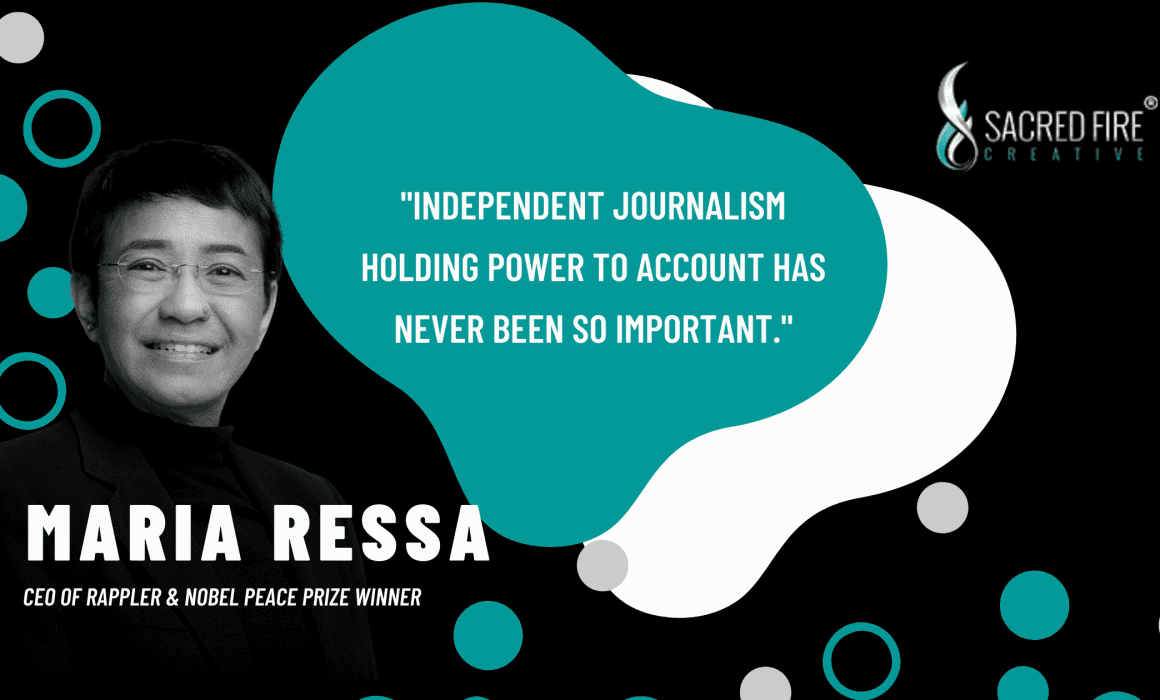
“I hope today’s Nobel Peace Prize 2021 award will remind the authorities in the Philippines, Russia, and around the world of the need to respect journalists and journalism. Independent journalism holding power to account has never been so important,” Maria said.

Recently, the Philippine Court of Appeals has granted Maria overseas travel after subjecting her to hold orders for the last couple of years. She will be delivering a series of lectures at the Harvard Kennedy School in Boston. However, she will return to Manila in December. To attend the awarding in Oslo, Maria would need to file new travel requests before the courts handling her seven pending cases.

As one of the newest Nobel Peace Prize laureates, Maria continues to inspire people around the world. Whether you see her as a journalist, a woman, or an Asian, her story is worth commending. How she fights for the truth and stands up to injustice demonstrates her strong character, worthy of our admiration.


Maria Ressa: Journalist and Activist

Journalism wasn’t always a life-threatening field of study. Times have changed, however, and some journalists have become activists who risk life and limb—even their freedom—to publish the truth. According to a New York Times article, 2018 was the most dangerous year on record for journalists; this trend has not shown any sign of waning.

No one knows this better than Filipino-American journalist Maria Ressa. She was Time Magazine’s Person of the Year 2018, part of this year’s Bloomberg 50 List, former bureau chief of CNN Philippines and Indonesia, and founder of Manila-based news outlet Rappler. In June of this year, in the middle of a global pandemic, she was convicted of cyber-libel.

Who is Maria Ressa?

Maria Ressa was born in the Philippines and moved to the United States with her family as a young child. She spent her early years living in New Jersey and studied English and Theater at Princeton University. In the 1980s, after the regime of dictator Ferdinand Marcos came to an end, Ressa decided to return to the Philippines. Back to her roots, she discovered journalism and spent the next 30 years as a television and broadcast journalist working around Southeast Asia. While working as a journalist, she had her first interview with Davao City Mayor Rodrigo Duterte, who would later become president of the Philippines in 2016.

She is the Chief Executive Officer of Rappler, which she founded in January 2012 along with three other female founders and 12 journalists. With the ultimate goal of building communities while using social media to do good, Rappler has grown into a well-respected independent news outlet known for its investigative journalism.

Before founding Rappler, Maria Ressa spent six years as the news division leader of ABS-CBN, formerly the Philippines’ largest TV network. Earlier this year, ABS-CBN was shut down due to legal issues, although many believe President Duterte had a direct hand in closing the networking giant down. This closure is just another example of the kind of political climate Ressa and other Filipino journalists face.

Covering Duterte’s “War on Drugs”

In 2016, under Ressa’s guidance, Rappler first started to cover President Duterte’s “army of trolls” who were seeding and spreading fake news to millions of his followers online during the Philippine presidential campaign. When he eventually won the election and became President, Rappler began to write stories on the administration’s “War on Drugs,” which killed over 7,000 people between July 2016 and July 2017.

During this dark time, President Duterte ordered the Philippine police to kill anyone they suspected of drug connections. Unsurprisingly, only small-time and usually lower-class drug users and street-side pushers were caught and killed in this brutal war. It left international syndicates and influential drug dealers who control the drug trade unscathed. Reporting on this is what put Rappler and Ressa in the spotlight and right in front of President Duterte’s line of fire. That would be the beginning of Ressa’s legal battles.

Her Legal Battles

Maria Ressa’s current legal battles stem from an 8-year old story that Rappler published alleging a Filipino business person had links to illegal drugs and human trafficking. The story was published in 2012, four months after the “cyber-libel law” was passed. In 2014, the story was re-published due to a typo, and the courts declared that it fell under the jurisdiction of the said law.

During the proceedings, the judge stated that Rappler did not offer proof of their allegations and convicted Maria Ressa with cyber-libel. She now faces the possibility of serving six years in jail. According to Ressa and Rappler, the case was politically motivated. Since 2018, there have been 11 cases filed against Rappler, including tax evasion and foreign ownership violations.

As her legal battles grew, so did her profile, both locally and internationally. She has become known worldwide as a symbol of standing up for the truth and battling an authoritarian president and would-be dictator. As Maria Ressa has said in an interview, “In a battle for facts, in a battle for truth, journalism is activism.”

An Inspiring Voice

The 2020 documentary “A Thousand Cuts,” produced by fellow Filipino-American Ramona S. Diaz, features Ressa. The film covers Maria Ressa and Rappler as they put up a fight against President Duterte’s attack on them and, inevitably, on freedom of the press. Throughout the film, Maria Ressa is a beacon of hope and strength-showing her humanity by voicing out her fears, yet never giving up on what she believes is right.

She has become an inspiring voice around the world. When Ressa talks about the attacks on freedom of speech, the truth, and facts, she is not just talking about the state of the Philippine press and politics but the state of the world. In this day and age, where people can get the news with a click of the button, they can also get fake news and lies at just the same speed. It has become Maria’s advocacy to stand up for facts and not give in to political pressure.

Currently, Maria Ressa is out on bail and still publishing. Rappler continues to cover the Philippines’ daily news, together with fearless views on the current Philippine administration. Ressa continues to stand for what she believes in and to fight the legal cases piling up against her and Rappler. It is interesting to note that in “A Thousand Cuts,” she asks the lawyer what the worst case can be filed against her. Her lawyer answered that it didn’t matter because the government would find the opportunity to file any claim against her, even child abuse, in their attempt to silence her.

From journalist to activist, Maria Ressa inspires journalists and women around the world with her strength and poise. She is an excellent example of the power of an individual who refuses to give up on facts and continues to fight for the truth.


Kamala Harris – A Woman of Many Firsts

The year 2020 has been historic in more ways than one. Despite being a year that many people would like to forget, it was also filled with remarkable firsts. It was the first time the US elected a woman to the second-highest position in government. Vice president-elect Kamala Harris made history and has become a bright light in these dark times. Not only is she the first woman vice president, but she is also the first African-American and first Asian-American to occupy this esteemed position. 

She shattered the infamous glass ceiling for women by being elected vice-president. More than that, she also broke through the “concrete ceiling” – a term used to describe the obstacles women of color particularly face. She went through it all with positive energy and a smile on her face. Kamala is a beacon of hope for women around the world, as she herself said during her victory speech, “While I may be the first woman in this office, I will not be the last, because every little girl watching tonight sees that this is a country of possibilities.” 

Her early years

Kamala Devi Harris was born in 1964 to immigrant parents, her mother Shyamala Gopalan Harris from India, and her father Donald Harris from Jamaica. Both her parents migrated to the United States to study for doctorate degrees at the University of California, Berkeley. This is where they met, got married, started a family, and continued pursuing their own careers. It would be natural to assume, and rightly so, that the environment that Kamala and her sister Maya were exposed to at a young age helped shape who they are today. With both parents being accomplished in their own fields and active in the civil rights movement, it was inevitable that these factors would influence Kamala and Maya in their own career choices. 

Kamala has said, “My parents marched and shouted in the Civil Rights Movement of the 1960s. It’s because of them and the folks who also took to the streets to fight for justice that I am where I am.” 

Her parents divorced in 1971, and Kamala and her sister were mostly raised by their single mother. They moved to Montreal, where Kamala finished high school before going back to the US to study political science and economics at Howard University. She, later on, obtained her law degree from Hastings College. 

Her mother Shayamala had a huge impact on Kamala’s life, and she often mentions her even today. In her own words, “There is no title or honor on earth I’ll treasure more than to say I am Shyamala Gopalan Harris’s daughter.” Sadly, her mother passed away from cancer in 2009 and is not here today to see how far her daughter has come. Despite this, Kamala never fails to mention just how much influence her mother had on her life and accomplishments.

A woman of many firsts

Throughout her life and her career, Kamala has been breaking barriers. We all know that she’s about to become the first woman Vice President, but she had many firsts even before she made her presence known on the national stage. She was also the first woman, the first African-American, and the first Asian-American woman to become the attorney general of California. In the Senate, she is the first Indian-American to serve as Senator while also being only the second African-American woman to hold this position. She is also the first Vice President to graduate from a historically black college, Howard University. 

Her husband Doug Emhoff also contributes to her string of firsts – he will be the first second gentleman and the first Jewish spouse of a US Vice President. Kamala didn’t set out to become the first in all these things – she accomplished them by following her own path and working hard towards her goals. Something we can all learn from. Kamala serves as an inspiration to women all over the world. She also shows that women can truly be trailblazers in any field.

Her love of cooking

For all her professional accomplishments, Kamala has also become famous for one more thing – her love of cooking. She is a self-professed passionate home cook and has shared a few of her personal recipes on her social media accounts. Recently, she shared a step-by-step recipe of her family’s favorite cornbread dressing for Thanksgiving. “During difficult times, I have always turned to cooking,” Kamala has said. Cooking is a source of comfort for her, and this passion started when she was a young child watching her own mother in the kitchen. 

“One of the things that I do to relax at the end of the day is I read recipes,” she shared in 2018, something many people can relate to. Now, we can all imagine her flipping through her favorite cookbooks after a long day at work. This open love of cooking is another thing that makes Kamala stand out from other career politicians. Her willingness to share snippets of her personal life with others is a wonderful way she connects to people. 

Kamala Harris and the future

The past few years in the US have not been easy, with racial and political divisions growing and becoming more evident in everyday life. Kamala Harris winning as vice president is a much-welcome change and a refreshing breath of fresh air. She serves as an inspiration to both women and people of color everywhere. 

We can all learn a lesson or two from Kamala and her journey — the importance of family, the influence of a mother’s love and example, and the greatness you can accomplish when you combine hard work and heart, no matter your circumstances. It will take many years to overcome the negativity and discord that have been sown in the US landscape. However, when there is someone like Kamala Harris helping lead the way to heal these wounds and to create a more equitable and just society, we can allow ourselves to envision and believe in a better future.


10 Questions with Abby Tarsches

In her own words, Abby Tarsches loves photographing people. A fine art photographer whose work has been published in the likes of Vogue and Bazaar, Abby strives to capture her subjects in their most beautiful and authentic. Every photo is a moment of memory and should, therefore, be timeless and enduring.

With these ten questions, Abby shares her insights on her work and life.

If you could go back in time, what would you tell your 11-year-old self?

Nothing stays the same. Go with the change.

What advice do you wish you had been given when you first started your business?

Get educated regarding running the business side of things.

What’s the most important lesson you’ve learned the hard way (in life or business)?

You cannot control everything. Live and let live.

What do people always get wrong about you or what you do?

That my work is glamorous and sexy all the time.

What shifts did you make in life or business as a result of the pandemic?

Focusing on shop local. Using all my skills as a photographer to help others keep their memories alive.

What do you love about what you do?

I love how a camera can freeze a moment in time. That people’s portraits and special occasions will have a history that will be remembered. I love that every time I photograph, I learn and see something new. That hopefully, I can make someone’s life better through the art of photography.

What is the best thing about doing business in Portland?

People are very friendly here. I like the connections I have made.

What is one of your favorite things to do where you live?

I love to hike with my dog at Mt Tabor!

Who has been the most important influence in your life and why?

My two children, Iris and Cara. They have expanded my heart and soul and give me new perspectives on life every day!

Who do you help in your business?

Women with body positivity and empowerment, business owners, families, and individuals.

Sacred Fire Creative features the members of Portland Connect Online in this series. Our goal here is to help womxn realize that they are extraordinary, that they can make a difference in their own lives, as well as in others’.

For Abby Tarsches, making a difference means capturing her subjects’ inner beauty with her photographs and helping them keep cherished memories alive.


10 Questions with Winslett Carr

Winslett Carr is an acupuncturist specializing in treating a range of women’s health issues, including sexual and reproductive health. It gives her great satisfaction in seeing her patients find relief from stress, chronic pain, and other conditions.

Her patients’ experiences mirror her own. In her 20s, Winslett led a stressful lifestyle working as a researcher for a non-profit in Washington, D.C. The day-to-day stress led her to get diagnosed with Crohn’s disease. It was rather ironic, considering that the non-profit she worked for is in the women’s health niche. Her quest for better health led her to study Chinese medicine and switching careers.

Winslett’s years of experience, both as a patient and as a clinician, have equipped her to help other women find healing. She shares her insights on her work and her life with Sacred Fire Creative by answering these 10 questions:

1. If you could go back in time, what would you tell your 11-year-old self?

Enjoy your time growing up: play softball, have fun with your friends, keep enjoying your favorite subjects, but most importantly, be your most authentic self. This will guide you to where you need to be.

2. What advice do you wish you had been given when you first started your business?

Start now, even if you start small. Find a mentor who can show you the ropes. Connect with colleagues in the field and beyond and stay in touch with your community for support. Send referrals; receive referrals.

3. What’s the most important lesson you’ve learned the hard way (in life or business)?

If you have no expertise in an area (tax planning), do not hammer yourself about it. Find and pay for excellent professional help and re-focus on what you do best.

4. What do people always get wrong about you or what you do?

Acupuncturist is a title, not the act of what I do. Acupuncturists study Chinese medicine and East Asian medicine theory, modalities, herbs, and nutrition. We are not just technicians with needles; we practice the complete art of medicine.

5. What shifts did you make in life or business as a result of the pandemic?

Although I spend as much time in the room with a patient as before, I do it wearing scrubs, masks, protective eyewear. I crinkle my eyes more to show people I’m smiling behind the mask. That, and I spend more time allowing Cavicide to dry on every surface between patients and before resetting the treatment room for the next patient. New normal.

6. What do you love about what you do?

I love hearing each person’s unique story. They’re not just sharing a health history but the way they shape their lives and what their dreams and goals are for the future. If I can help them, in some small way, to continue moving towards their dreams and goals, well, there’s nothing better than helping people in that way.

7. What is the best thing about doing business in Portland?

Portland is still a wonderfully small city with 7 degrees of separation. There are many entrepreneurs here. Everyone understands that if you are an effective and caring professional, your business will steadily grow.

8. What is one of your favorite things to do where you live?

I hike to see everything that the area offers. Portland and the entire Pacific Northwest are filled with world-class vistas—Douglas fir-covered capes with trails to secluded beaches, the snow-covered Cascade Range of still active volcanoes, prehistoric forests with cool mountain streams, and even high desert landscapes with wild horses.

9. Who has been the most important influence in your life and why?

My mother is a force and a force for good for everyone who surrounds her. She returned to graduate school with my then-infant brother in tow. She works smart for sure, but she gets more things done in a day than almost anyone I know. She’s a “Type A” and also very intuitive and caring. I aim high because of her, and I help others where I can because that’s what she always did.

10. Who do you help in your business?

I help women working on goals and really pursuing their dreams of having a family, having health, living authentically and pain-free.

Sacred Fire Creative shines the spotlight on the members of Portland Connect Online in this series. Through this series, we aim to help womxn realize and believe that they can be extraordinary and make a difference in other people’s lives.

For Winslett Carr, making a difference means assisting women in their journey to better health and a family of their own through her acupuncture practice.


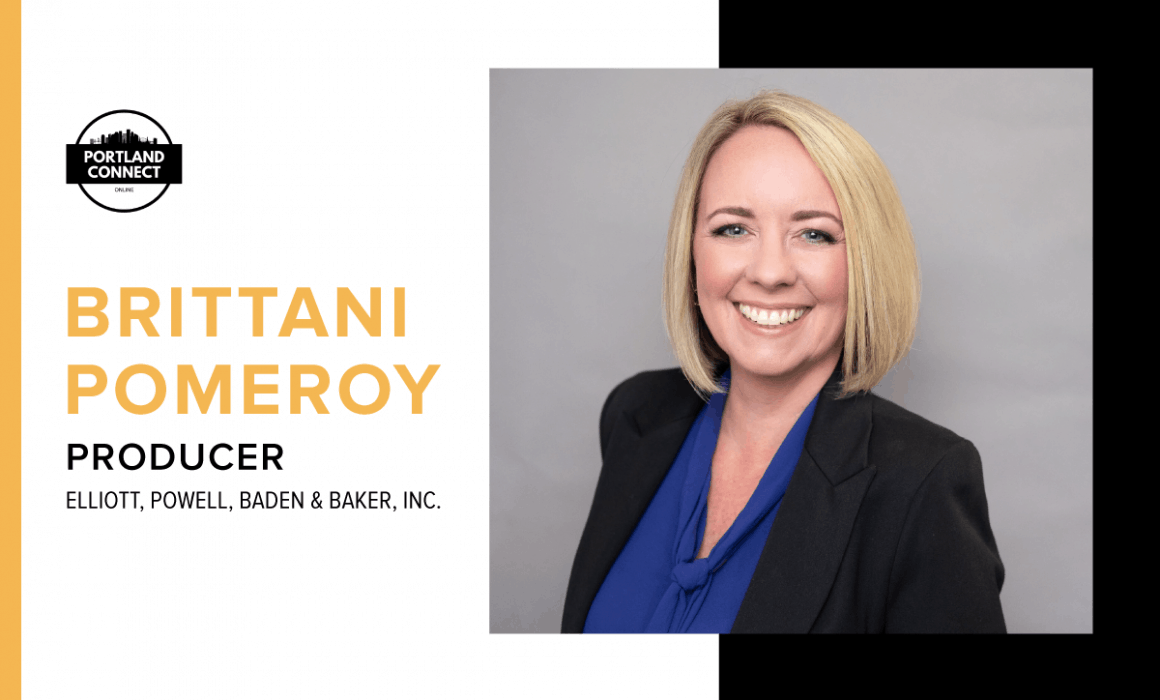
10 Questions with Brittani Pomeroy

Brittani Pomeroy is a great believer in autonomy. As an Insurance Advisor with Elliott, Powell, Baden & Baker, she works closely with her customers as their advocate. She believes it’s her job to help her clients feel secure that they have the best options in place in case they meet with unforeseen losses.

Brittani answers ten questions for Sacred Fire Creative. Through these answers, she lets us into her thoughts on the work she does and the life she lives today.

1. If you could go back in time, what would you tell your 11-year-old self?

Change is constant; we must learn to look for the positive in every transition.

2. What advice do you wish you had been given when you first started your business?

Slow down and make sure to build the proper foundation for your business. This is a marathon, not a sprint.

3. What’s the most important lesson you’ve learned the hard way (in life or business)?

The impact of not having the proper foundation. It makes it harder to maintain the same level of success and service.

4. What do people always get wrong about you or what you do?

I am a very direct person. At times I’ll have a coworker tell me that I am not open to their opinion. But that is not correct. Instead, I like to understand their reasonings so I can process and make my own determination.

5. What shifts did you make in life or business as a result of the pandemic?

I now have to make time to help my son with his homework. So at times, my work hours are not the typical work hours.

6. What do you love about what you do?

I truly love partnering with my customers to make sure they have the necessary coverages for unforeseen losses.

7. What is the best thing about doing business in Portland?

Portland is a city with a small-town feel. The individuals I have worked with seem to like to sell based on relationships.

8. What is one of your favorite things to do where you live?

I love that I can walk to my grocery store, bakery, ice cream shop, nails. Plus, I have an amazing view of Mt. Hood.

9. Who has been the most important influence in your life and why?

My grandmother. She always taught me to be true to myself and pay attention to actions over words.

10. Who do you help in your business?

I partner with companies that want to make sure they have the proper insurance for their business today plus future endeavors they have planned.

Sacred Fire Creative showcases the members of Portland Connect Online in this series. Our aim is to let all womxn realize that they are capable of doing extraordinary things. Womxn can make a difference, not just in their own lives but also in others’.

In Brittani Pomeroy’s case, it’s all about helping people put down safeguards that will protect them against uncertainty and unforeseen losses. She encourages her clients to be proactive about their future.


10 Questions with Jennifer Armenta

Jennifer Armenta started many businesses, but it took some trial and error and plenty of effort to succeed and thrive. Like most womxn, she realized the value of enjoying life a little too late. She also learned ideas don’t simply bring success; research and empathy do.

Jennifer is a Highlands Certified Consultant and Certified Career Services Provider. She revels in helping her clients find confidence within themselves to do what they need to do. She believes being true to yourself is great, and having plans for your future is even better.

Here’s an insight into Jennifer’s personal and work thoughts:

1. If you could go back in time, what would you tell your 11-year-old self?

I would tell myself to remember to always have fun. Being an adult is full of responsibilities. It is important to have fun and laugh every day.

2. What advice do you wish you had been given when you first started your business?

Make sure that what you are offering is something your customer needs or wants. Just because you think it is a good idea does not mean that everyone will. Do your due diligence before you launch your business.

3. What’s the most important lesson you’ve learned the hard way (in life or business)?

I have started many businesses in my life. Some have been successful, and some have not. After my last business did not work out, it took me several years to get back up. My current business is thriving, but it is because I learned from the past. I had to look back at what didn’t work and create new strategies that led to success.

4. What do people always get wrong about you or what you do?

Thinking that all coaches are the same. I distinguish myself by taking a very intuitive approach to each client. Each person that I work with has different fears, goals, and expectations. So, I develop a unique plan for each client I work with, providing the most value I can with the time we spend together.

5. What shifts did you make in life or business as a result of the pandemic?

I have been very lucky that I have not had to make significant changes. Although I genuinely miss in-person meetings, I can provide all of my services virtually.

6. What do you love about what you do?

I love helping someone confidently make a big decision about their future. There is nothing better than seeing someone’s face light up when they finally figured out what their next steps are. It feels good to be there for someone through these milestones.

7. What is the best thing about doing business in McMinnville?

The amazing community. McMinnville is a wonderful place to do business. The Chamber of Commerce, McMinnville Economic Development Partnership, and other local groups truly support local business owners.

8. What is one of your favorite things to do where you live?

I love spending time with friends and family in downtown McMinnville. There are fantastic restaurants, coffee shops, and pubs that we frequent regularly.

9. Who has been the most important influence in your life and why?

My parents. They always taught me to be true to myself and follow my intuition. With this solid foundation, I am now able to help my clients do the same.

10. Who do you help in your business?

I help people who are in career transition. I love helping older students clarify their next steps in life. I also work with new and aspiring leaders to identify their strengths and help them confidently develop their leadership style.

We’re trying to let all womxn know that they can make a difference. You don’t need to be special, above average, or anything else but yourself to be significant. Sacred Fire Creative showcases members of Portland Connect Online to show you that ordinary womxn like you and me can do extraordinary things.

In Jennifer Armenta’s case, she encourages people to find themselves and set goals for their future. She enjoys empathetically leading people as well as managing employees and developing organizations. With this, she empowers not only herself but also others.


Privacy Settings
We use cookies to enhance your experience while using our website. If you are using our Services via a browser you can restrict, block or remove cookies through your web browser settings. We also use content and scripts from third parties that may use tracking technologies. You can selectively provide your consent below to allow such third party embeds. For complete information about the cookies we use, data we collect and how we process them, please check our Privacy Policy
Youtube
Consent to display content from Youtube
Vimeo
Consent to display content from Vimeo
Google Maps
Consent to display content from Google