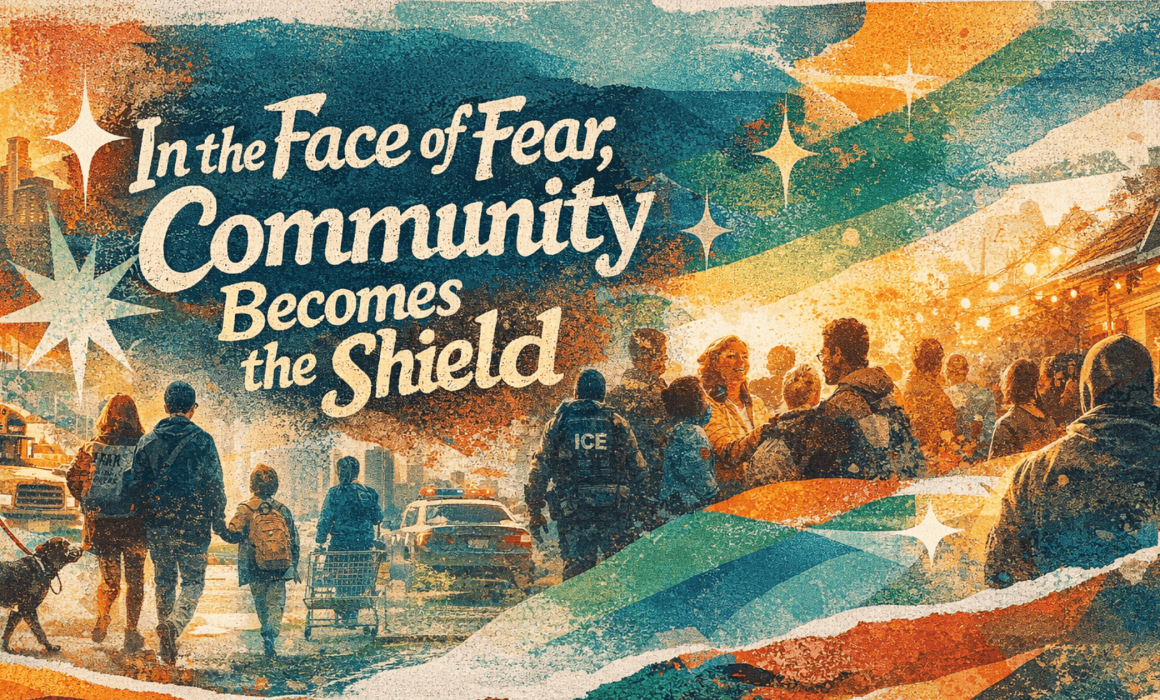
In the Face of Fear, Community Becomes the Shield
Fear has a way of making our world smaller.
It turns everyday routines into risk assessments. It makes people second-guess the normal stuff: school drop-offs, grocery runs, walking the dog, commuting to work.
It makes communities feel quieter than they should.
Not because people don’t care. Because people are trying to stay safe.
That’s the atmosphere Minneapolis is navigating right now.
In early January, ICE said it was sending around 2,000 federal agents into the Minneapolis area for what it described as the “largest immigration operation ever.” Since then, national reporting has described heightened enforcement activity, public outcry, and shifting guidance inside ICE about how operations are conducted there. The situation has also been intensified by reports of fatal shootings of poet Renee Good and nurse Alex Pretti, fueling grief and anger alongside fear.
This is not the kind of moment that you power through alone.
This is the kind of moment where community becomes essential.
Not as a nice idea, but as a real-world safety net.
What community looks like in Minneapolis right now
When institutions feel unpredictable, people build reliability for each other.
That’s what’s happening across the Twin Cities. Ordinary people are creating extraordinary support systems: mutual aid, rapid response, and practical care that helps families keep living their lives.
A report described volunteers coordinating to warn immigrant communities about approaching agents, often using encrypted messaging to share information quickly and organize support.
It’s neighbors packing boxes of food for families who are afraid to leave home.
Co-workers sharing rides to work because rent still comes due even when the world feels dangerous.
Teachers reopening remote options so kids can keep learning while sheltering in place.
Churches and local business owners checking in to help.
These small, coordinated actions add up into something protective and powerful: a reminder that while fear isolates, community reconnects.
And reconnecting with community is how people get through any crisis.
Action steps that actually help
We don’t have to wait for the situation in Minneapolis to happen to our own neighborhoods. We can use the lessons here to sharpen our own community instincts.
Ask yourself: If something sudden and scary happened here, would you have a plan that isn’t just “wait and hope”?
If you don’t have a plan yet, you can start building one now, while you still have the bandwidth.
Here are a few steps that can actually help.
1. Join or start a practical support network.
Mutual aid isn’t abstract. It’s food, rides, childcare, temporary lodging, and someone who answers the phone. If you’re part of a faith community, a neighborhood group, school community, or local business network, coordinate what you can offer and how people can safely request it. Here’s one network you can use to organize: LOCL.
2. Support trusted local orgs doing legal and humanitarian work.
Prioritize immigrant-led organizations and established legal aid groups. If you’re donating, give money when you can. It’s flexible and fast.
3. Share verified information, not adrenaline.
Rumors move faster than help. Use credible local reporting and trusted community channels. Share official updates and fundraising links, not random screenshots. Accuracy is part of safety, as well as a starting point for understanding what’s happening and who is responding.
4. Check on people without making them explain themselves.
Specific offers reduce the emotional labor of asking. So, instead of asking people if they’re okay, try saying something like, “I’m doing a grocery run. Can I drop something off?” or “If you ever need a ride, I can be your backup.”
5. Accountability matters.
Call your local officials and lawmakers to have them know how the situation affects you. Attend local council meetings. Support policies and funding that protect due process and community safety.
If things feel scary and uncertain right now, that’s not weakness. That’s your nervous system picking up on real-world cues.
But fear doesn’t have to be the thing that drives the story.
It should be community.
So, find your community. Band together. Be the steady person. Do the small practical thing today that makes someone else’s tomorrow less terrifying.
Because when people move as a community, they don’t just endure hard seasons.
They outlast them.
If you have a story that your community needs to know, we’re here to help you amplify it. Reach out to Sacred Fire Creative, and let’s work together.