Articles Tagged with: women in business

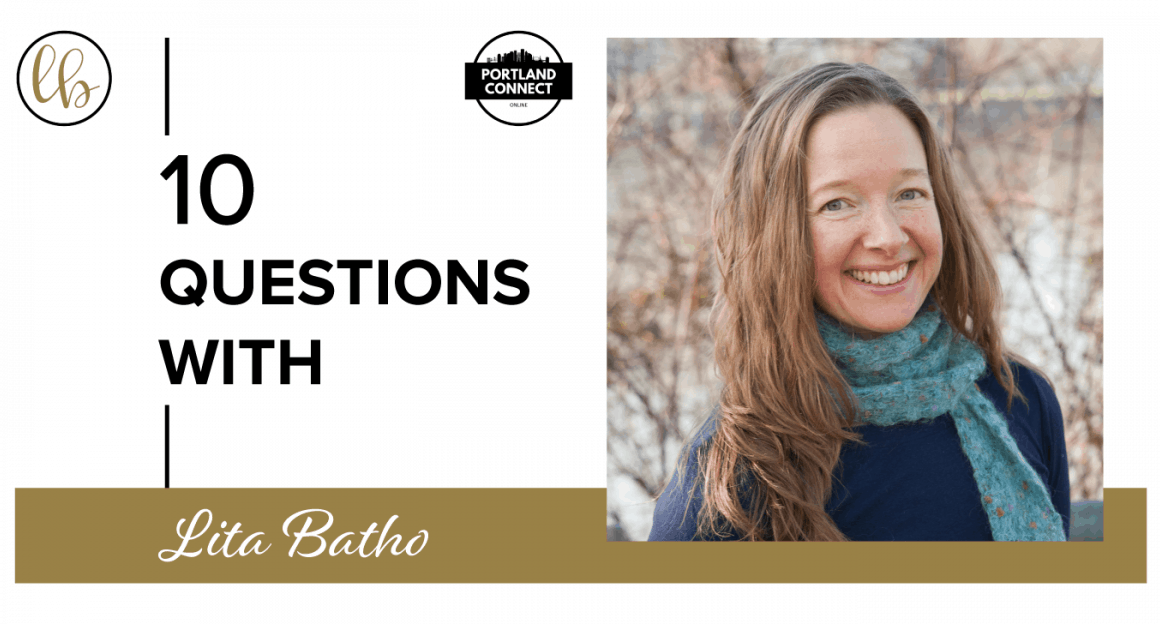
10 Questions with Lita Batho

Lita Batho believes you should love where you live. Like other womxn entrepreneurs, she strives to make a difference doing a job she believes in. At present, she works at Keller Williams as a real estate agent.

Lita ensures she understands her clients and their vision as she assists them in choosing a house. She knows you’ll live in your home for a long time, so it’s important to her that you love where you live. After all, if you love your residence, you’re more likely to love life and everything within it.

Here’s an insight into Lita’s personality and the things that drive her:

1. If you could go back in time, what would you tell your 11-year-old self?

Keep that positive attitude. And yes, you can do anything.

2. What advice do you wish you had been given when you first started your business?

These relationships can last decades: get to know everyone you meet, be kind, and stay in touch.

3. What’s the most important lesson you’ve learned the hard way (in life or business)?

Listening is more effective than telling.

4. What do people always get wrong about you or what you do?

A big part of what I do as a real estate agent is negotiating and making sure each step of the process moves forward in a timely manner. A lot goes on behind the scenes of looking at homes and making offers, and it takes a lot of attention to detail and thinking through the strategy to make sure my clients have a stress-free process and achieve their goals.

5. What shifts did you make in life or business as a result of the pandemic?

The beginning of the pandemic felt like a nice, quiet lull with no one driving, families outside in the spring weather, and cooking at home.  As the pandemic went on, though, I am so grateful that most of the process of buying or selling a home can be done virtually (contracts, communicating between agents, title, and closing). Of course, I still cherish the time I get to show houses in person and finally hand keys to new buyers.  It helped me appreciate the time I do have in person with any client and the ability to work virtually.

6. What do you love about what you do?

I love getting to know clients and having their trust to facilitate a life change. I also love living in Portland, and by extension, helping others to get to know neighborhoods, the home styles here, and finding solutions for my clients to make their next move.

7. What is the best thing about doing business in Portland?

As a real estate agent, I love the region. It offers year-round gardening, outdoor recreation, and unique neighborhoods; there really is something for everyone.

8. What is one of your favorite things to do where you live?

I love our local restaurant owners and farmers. I like to support them by shopping at the farmers’ markets and eating (or taking out) from independently-owned restaurants. I also love day trips to the gorge or the coast, hiking, and neighborhood walking.

9. Who has been the most important influence in your life and why?

My mom had her own business (retail shops). To me, she was a great example of a small business owner and someone working on building a business.  I remember her advocating for herself with bankers and running the business when I was small, and I grew up in and around her stores.

10. Who do you help in your business?

I help home buyers and sellers transition from one situation to the next. I do this by connecting them with my trusted partners for lending, home inspections and repairs, and other services.

Sacred Fire Creative aims to let everyone know we can all make a difference. You don’t have to be special, above average, or anything else but you to make a difference. Members of Portland Connect Online show you that ordinary womxn can do extraordinary things that make significant differences in people’s lives.

In Lita Batho’s case, she’s ensuring every individual or family appreciates their house. Before practicing real estate, she had been a yoga teacher that helped womxn stay healthy and manage their stresses for over 19 years.

Introspective Dialogue on Racism and Equity-Based Interventions with Nathan Baptiste: A Recap

On January 11, 2021, Sacred Fire Creative hosted a virtual forum entitled “Introspective Dialogue on Racism and Equity-Based Interventions.” The purpose of this forum is to provide a safe space for professionals and business owners to have a relevant discussion on diversity, equality, inclusion, and belonging, collectively known as DEIB. The forum also recognizes a strong need for employers to create meaningful change in the workplace through DEIA-based interventions.

For this online event, Sacred Fire Creative invited Nathan Baptiste, the founder and principal of EDI Mindfulness Consulting.

Nathan’s story

Through EDI Mindfulness Consulting, Nathan helps various organizations in developing inclusive and equitable work environments. Before he got into consultancy, he served as Oregon Metro’s diversity program manager. His work there included launching an equity, diversity, and inclusion professional development training plan. He also has experience in the academe, leading the diversity programming at the Lewis & Clark College.

Nathan shared a personal encounter with racism during the forum. He grew up in a predominantly white neighborhood and attended a mostly white high school in Oregon. As one of the few Black students in the school, he experienced bullying, especially during his sophomore year. His schoolmates made a game of throwing rice at the back of his head to see if the grains would stick to his afro. Some of them even called him the n-word.

To address the issue, Nathan went to see his school’s assistant principal, to whom he suggested including Black history and literature in the curriculum. However, the assistant principal’s response was colorblind—that if the school started offering classes on Black history and literature, it would have to do the same for the Asian and Latino students. This caused Nathan to feel withdrawn. He knew that the bullying he experienced because of his race was wrong. But at the time, he didn’t have the language to process it. So he internalized it instead.

This changed during his junior year. In that year, Nathan’s classes included a political action seminar. One of his projects there was organizing a dialogue on racism and the prison system. It turned out successfully, as did his later projects for the class. He found it encouraging because it sowed open-mindedness about race discussions in a less diverse environment.

The need for explicit dialogue on racism

Nathan raised the following points during the forum:

  • The event is timely, as it came at the heels of the rioting that occurred at the US Capitol on January 6.
  • There’s a need to define what white supremacy is, as well as its effect on individuals.
  • Racism is both internal and interpersonal, and it has become systemic in society. It’s so laced into our institutions and our culture that even people of color have internalized it.
  • Racism is not a competition; instead, it is intersectional, as we don’t live one-cause lives.
  • We need to have explicit conversations about racism. We need to raise awareness of how racism manifests systemically and allow ourselves the space to reflect on it.
  • Any conversation on diversity will fail if racial equity is left out of it.
  • The more diverse a workplace is, the more innovative it becomes and the better it would be for the organization’s bottom line.

Questions to discuss

The forum participants were then divided into breakout groups to discuss the following questions:

  1. How do you define white supremacy?
  2. How may you define anti-racism, and what principles help you to define it?
  3. Going beyond simple statements of condemnation or support, in what ways does white supremacy and anti-racism show up or not as influences in your life?

The participants agreed that this conversation about racism isn’t going away anytime soon and must be continuous. Many suggested gaining others’ perspectives on the issue, calling out racism instances on the spot, and watching who you vote for.

Sacred Fire Creative continues the dialogue with its lineup of DEIB virtual forums. Check the schedule of these events and join the conversation today:


Privacy Settings
We use cookies to enhance your experience while using our website. If you are using our Services via a browser you can restrict, block or remove cookies through your web browser settings. We also use content and scripts from third parties that may use tracking technologies. You can selectively provide your consent below to allow such third party embeds. For complete information about the cookies we use, data we collect and how we process them, please check our Privacy Policy
Youtube
Consent to display content from Youtube
Vimeo
Consent to display content from Vimeo
Google Maps
Consent to display content from Google